What Connects Us: Heart to Heart and Threads of Life
Yung Ma, senior curator at Hayward Gallery, talks to Grimshaw Foundation about the two exhibitions and the power of materials to connect us to the past, the present, and each other.
What does it mean to be connected?
It is the question that simmers beneath both exhibitions currently on show at the Hayward Gallery: Heart to Heart, a thirty-year survey of Chinese artist Yin Xiuzhen, and Threads of Life, a major exhibition by Japanese artist Chiharu Shiota. The two new shows occupy different levels of the building, and on the surface they are very different things. But when experienced together, a shared narrative emerges.
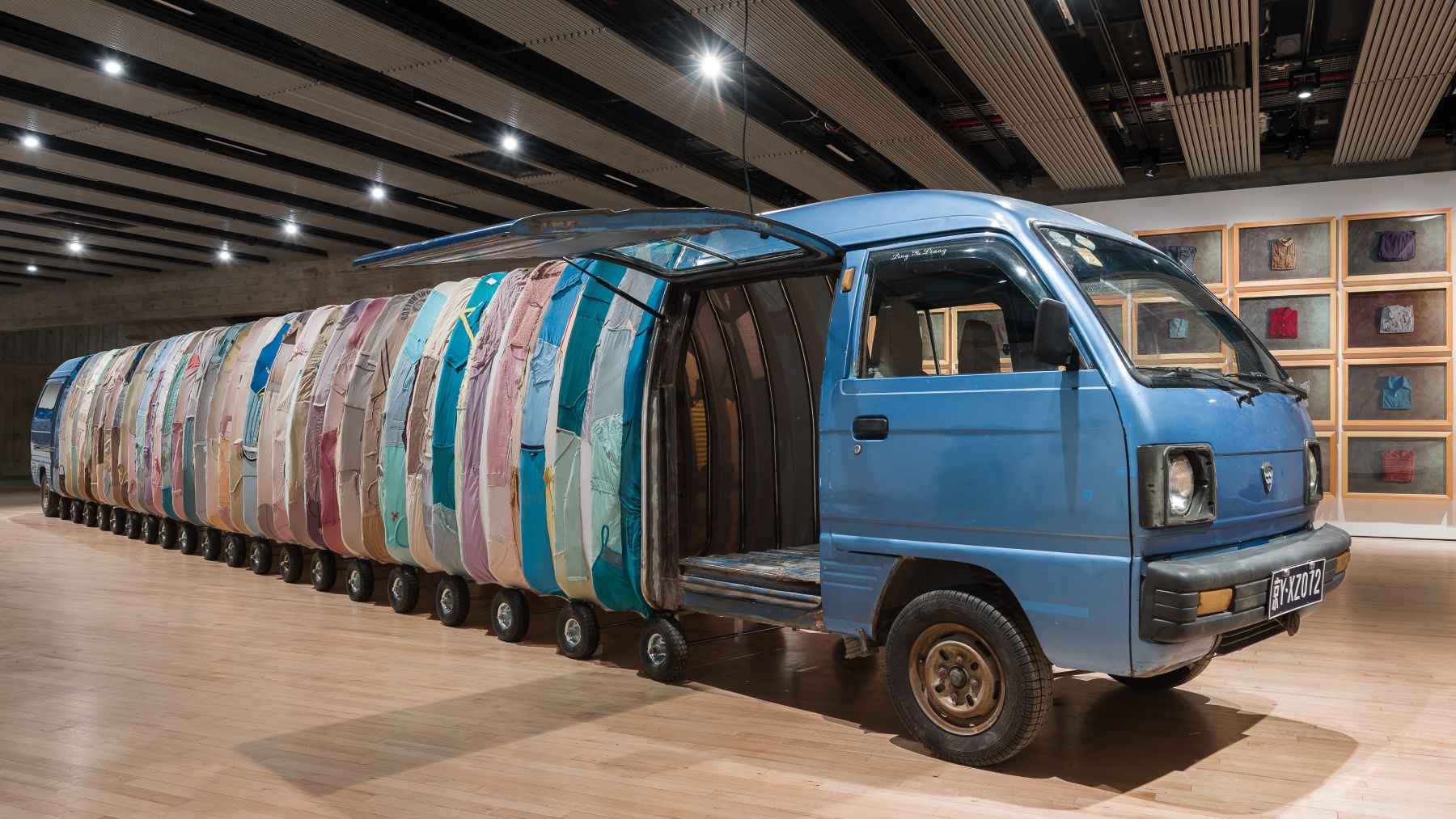
In Yin Xiuzhen's lower galleries, connection is something you can literally touch. Thousands of used garments, collected over decades, have been transformed into billowing sculptures and immersive installations. The clothes carry the invisible imprint of the bodies that wore them, the lives lived in them. Clothes envelop you, protect you; they are a second skin, projecting something of the inner self outward.
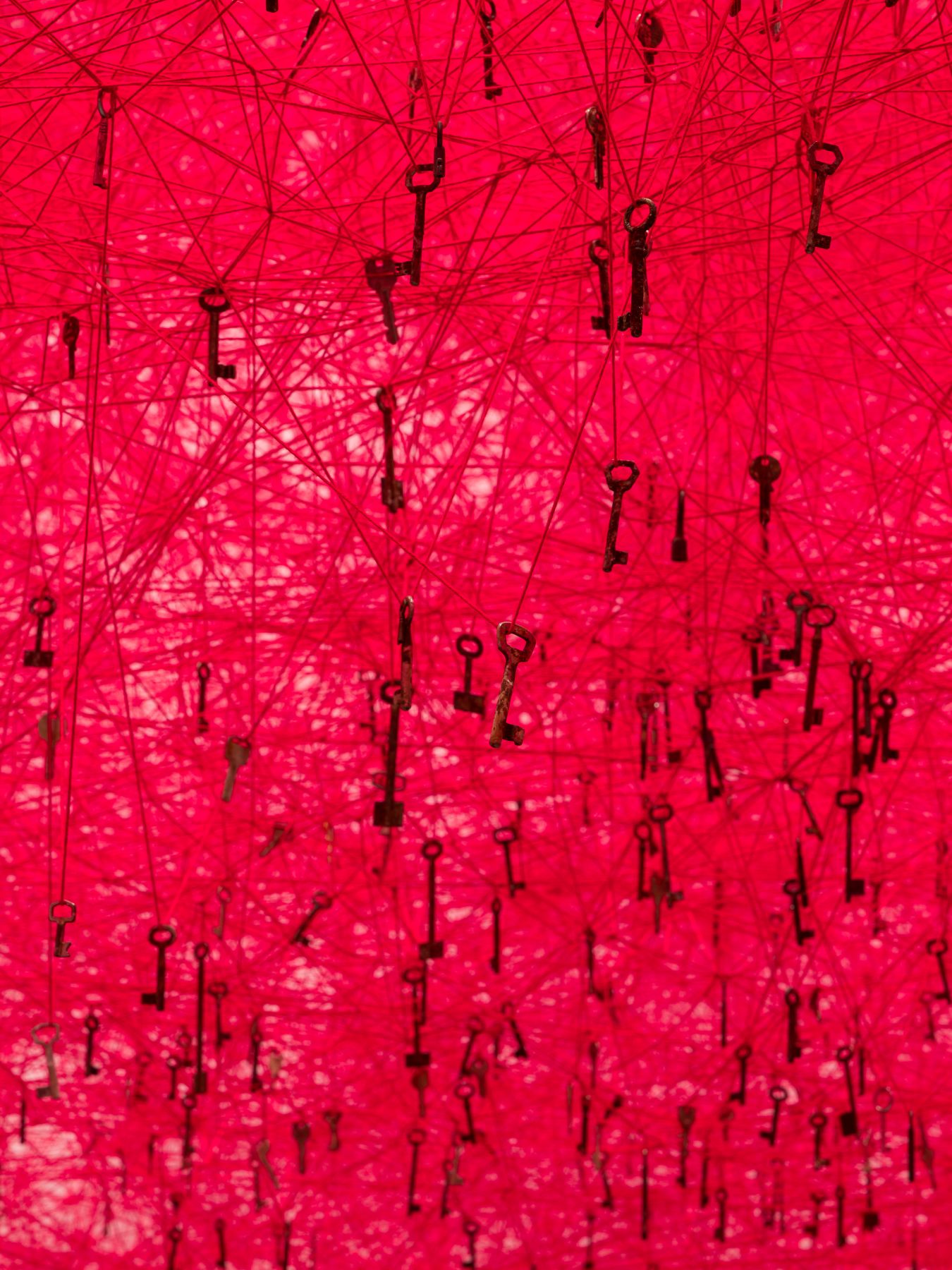
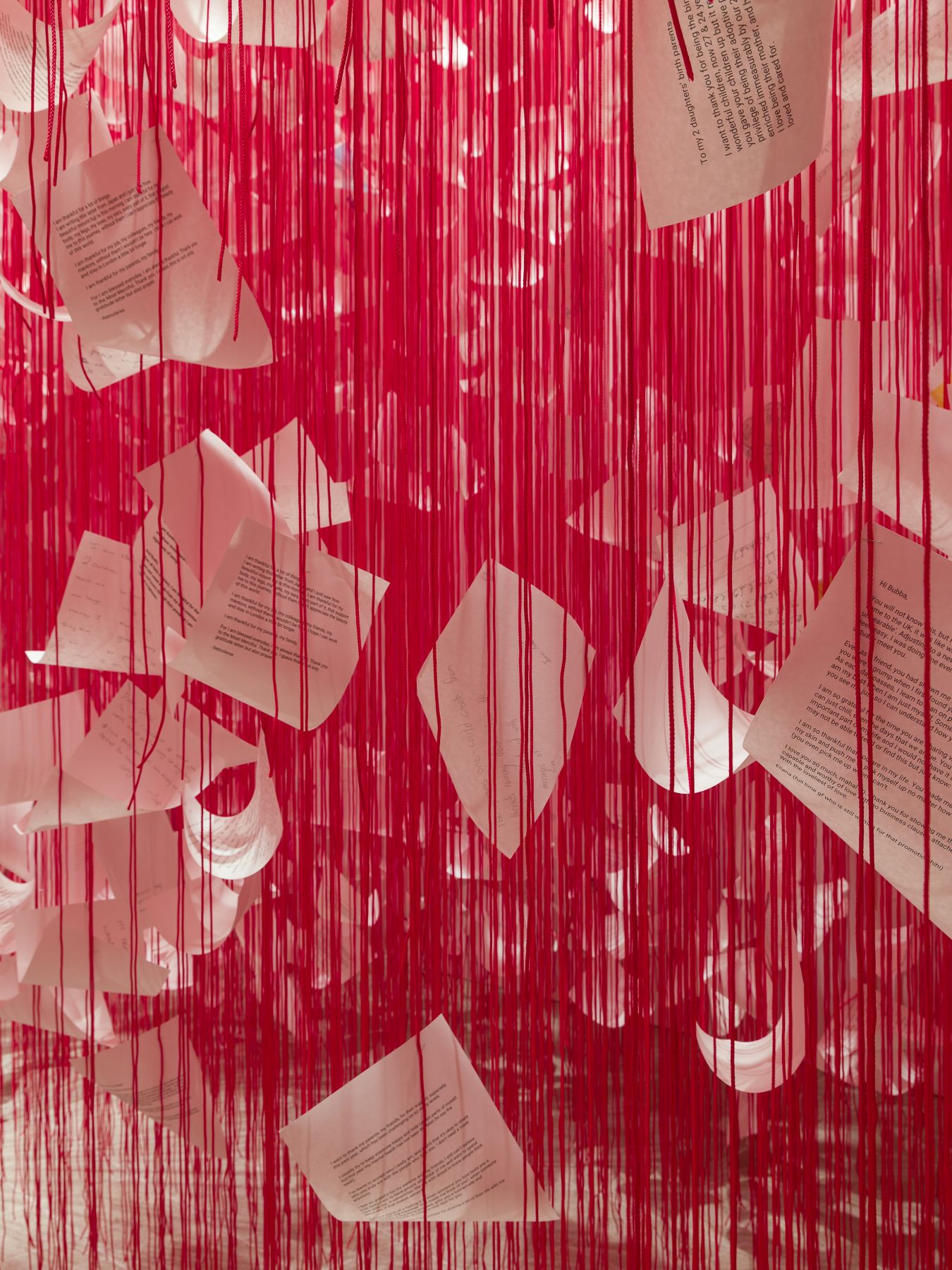
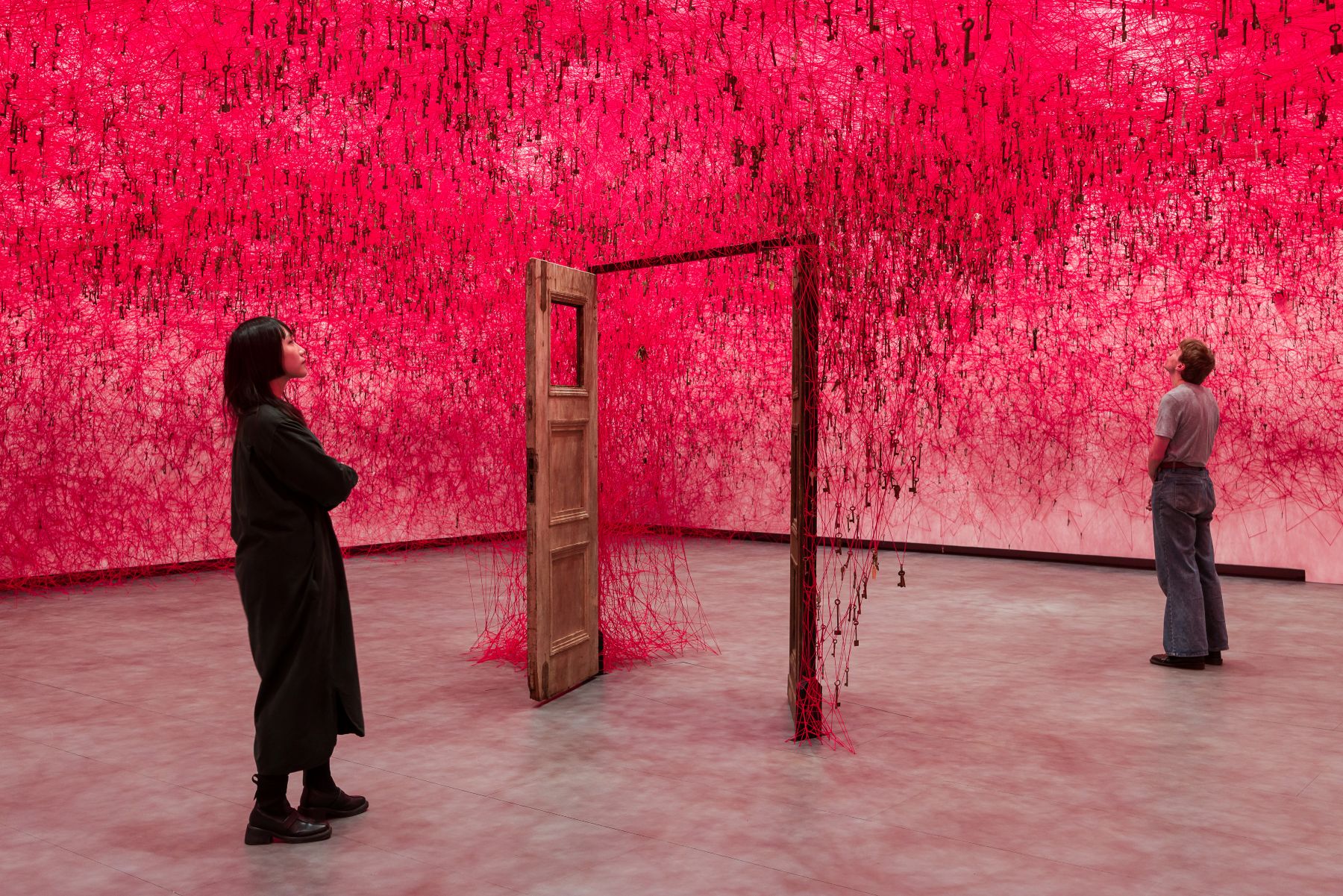
Upstairs, Chiharu Shiota makes that feeling visible on an entirely different scale. Red threads stretch from floor to ceiling across an entire room, like a neural pathway or a root system, enclosing you in a physical representation of human connection. It is at once comforting and overwhelming. And in an adjoining room, thank you letters written by strangers to the people they love hang among the ropes, raw and tender and entirely unguarded. It is an intensely personal experience, and a shared one; those letters will travel with the work for years to come, accumulating voices across countries and cities not yet visited.
I sat down with Yung Ma, senior curator at the Hayward responsible for bringing these two artists together, to understand what connects them.
Elise Nwokedi (EN): These two exhibitions feel deeply connected in theme, even though the artists' practices are very different. Can you introduce them both, and tell us how you came to bring them together?
Yung Ma (YM): Heart to Heart is Yin Xiuzhen's first ever survey exhibition, which is very exciting for me. We are able to bring together works from the last thirty or so years to really give the audience a comprehensive view of her practice. I've known her quite a long time, even though we never actually worked on an exhibition together before, and I have always been a great admirer of her work. I think she has a very unique language.
On the upper levels, we have the major exhibition of Japanese artist Chiharu Shiota, who has been living and working in Berlin for over thirty years. Broadly speaking, they both work with textiles, with threads, and they both create immersive installations, often at very large scale. But for me, the more important connection is their shared interest in memory, identity, and the meaning of life. It is never really about the individual. It is about the links between each other, and with the world.
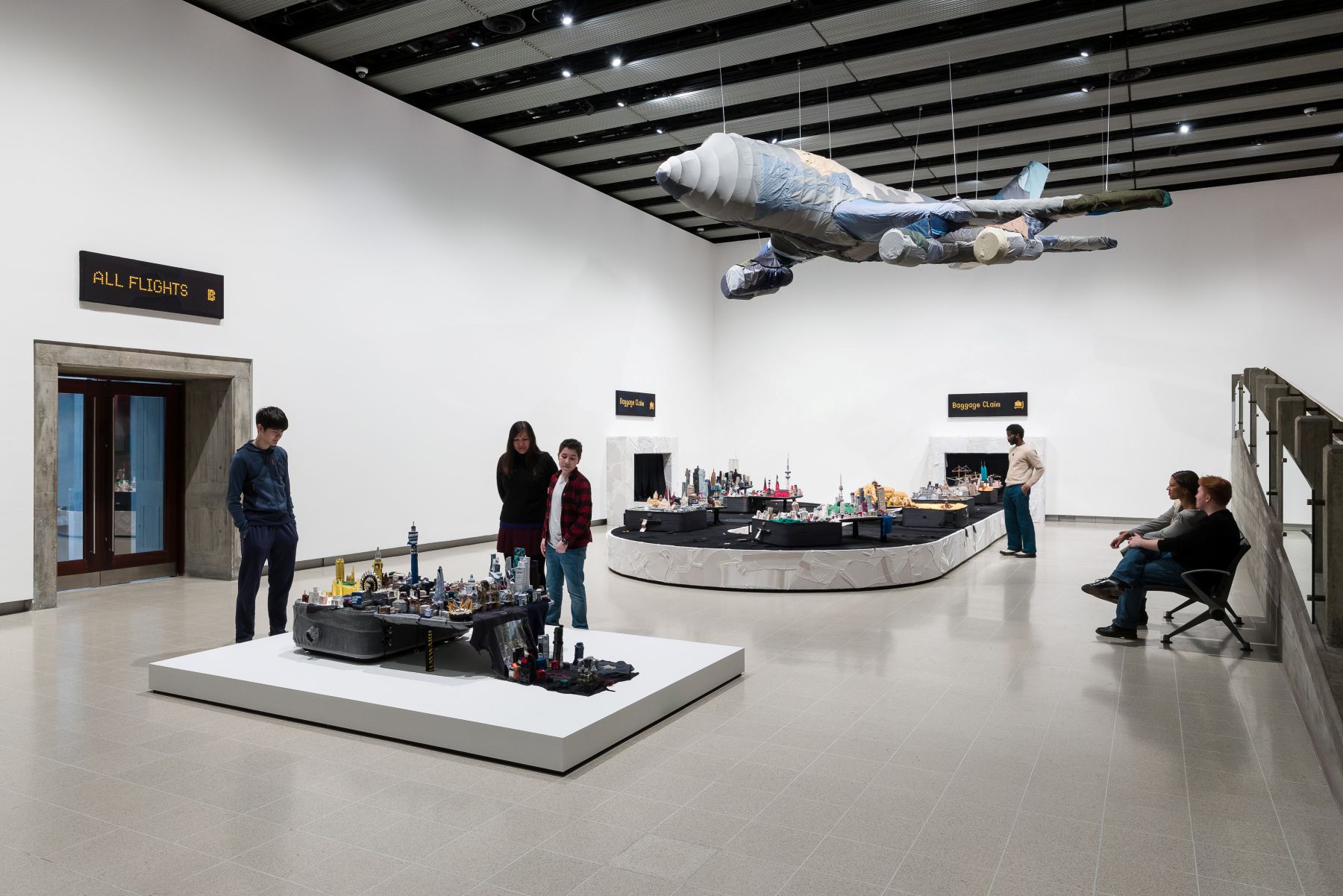
EN: The exhibition's opening installation is a fictionalised airport terminal, a space of arrival, departure, and transience. It seems like a perfect setting for thinking about what we carry with us. Can you walk us through it?
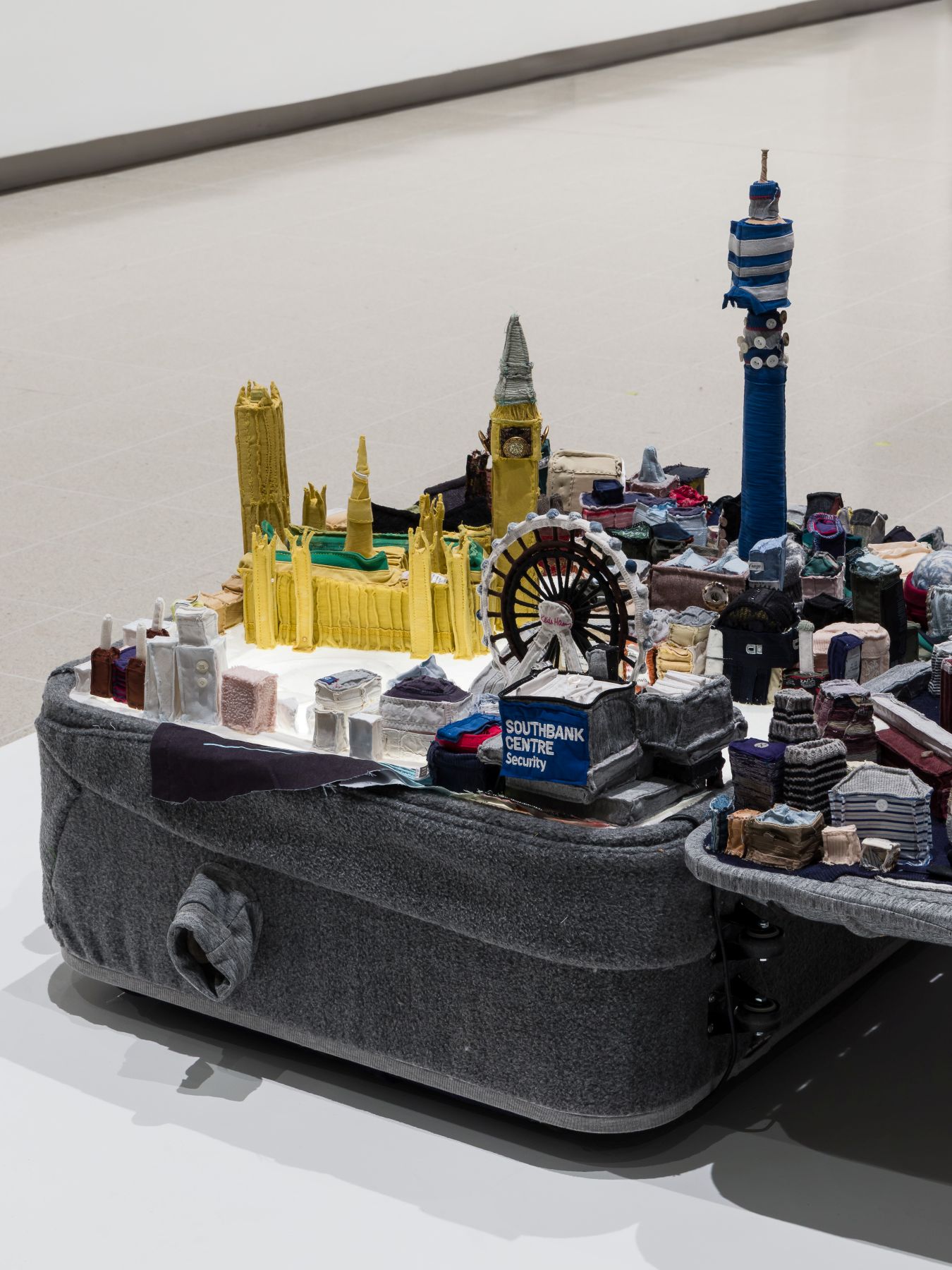
YM: The gallery is set up as a fictionalised airport terminal, International Airport Terminal Two, which is actually a sequel to an earlier work. And the suitcases that you see belong to a different body of work called Portable Cities, which she started in 2001. She has made 47 of them so far, and this is still ongoing.
Each city is her impression of a place she has visited, either for work or leisure. She started to get invited to exhibit internationally in the early 2000s, and she began spending quite a lot of time in airports. She became curious: what are other people packing in their suitcases? She has this belief that we carry a tiny piece of home with us when we travel. And so the Portable Cities are her way of trying to answer that: creating these cityscapes within a suitcase.
EN: Yin Xiuzhen is perhaps best known for her work with used garments, transforming discarded clothing into immersive sculptures and installations. What is it about that particular material that speaks so powerfully to collective experience?
YM: She really believes that what we wear represents who we are; the garments contain our lived experiences. We choose the way we dress to express our identities. So there are all these different stories contained within the clothing. And it is not just the clothes either; she also uses other used objects that carry the memories of the people who wore or used them.
One of the main reasons she has been using recycled garments is that it is deeply rooted in the idea of a second skin.
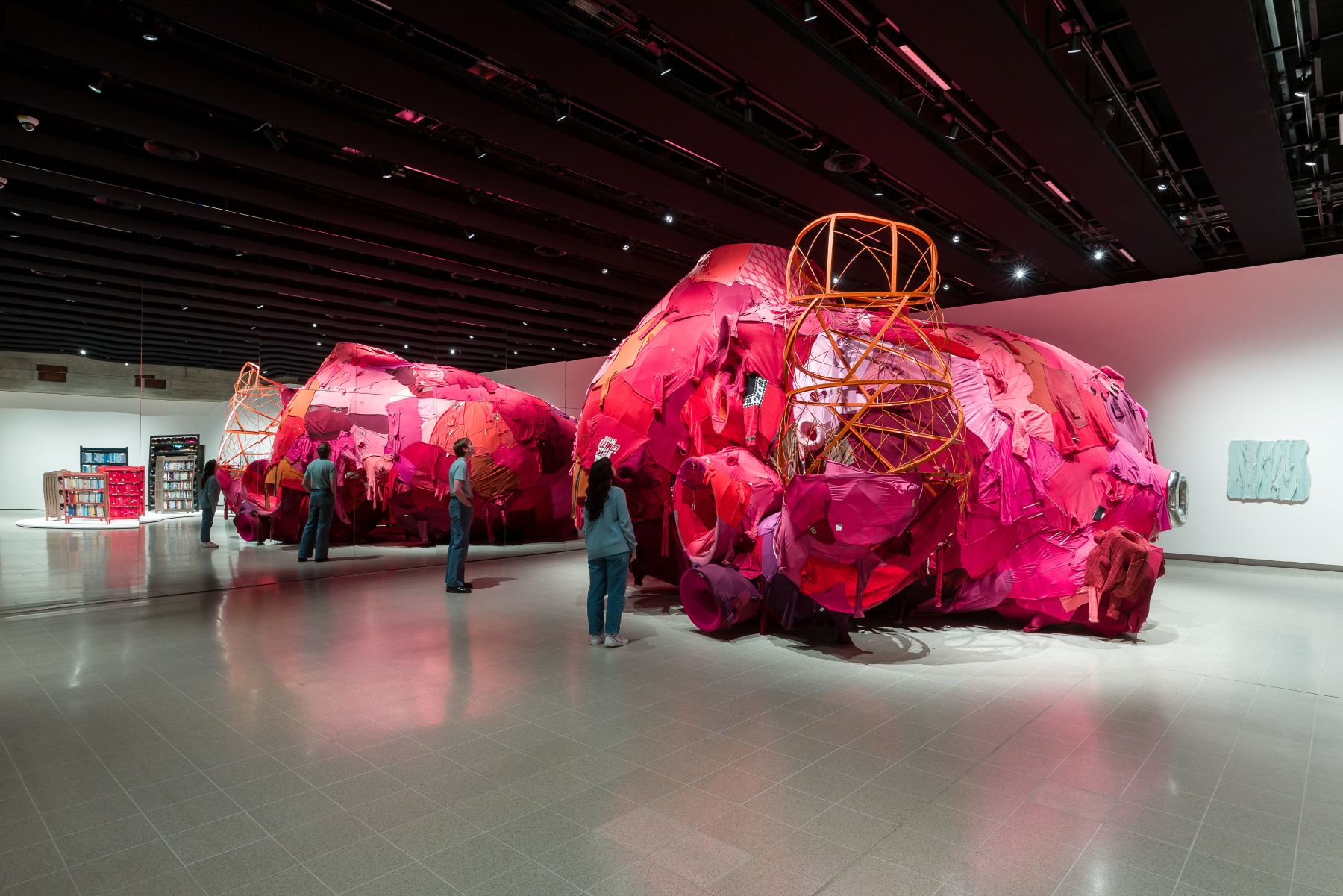
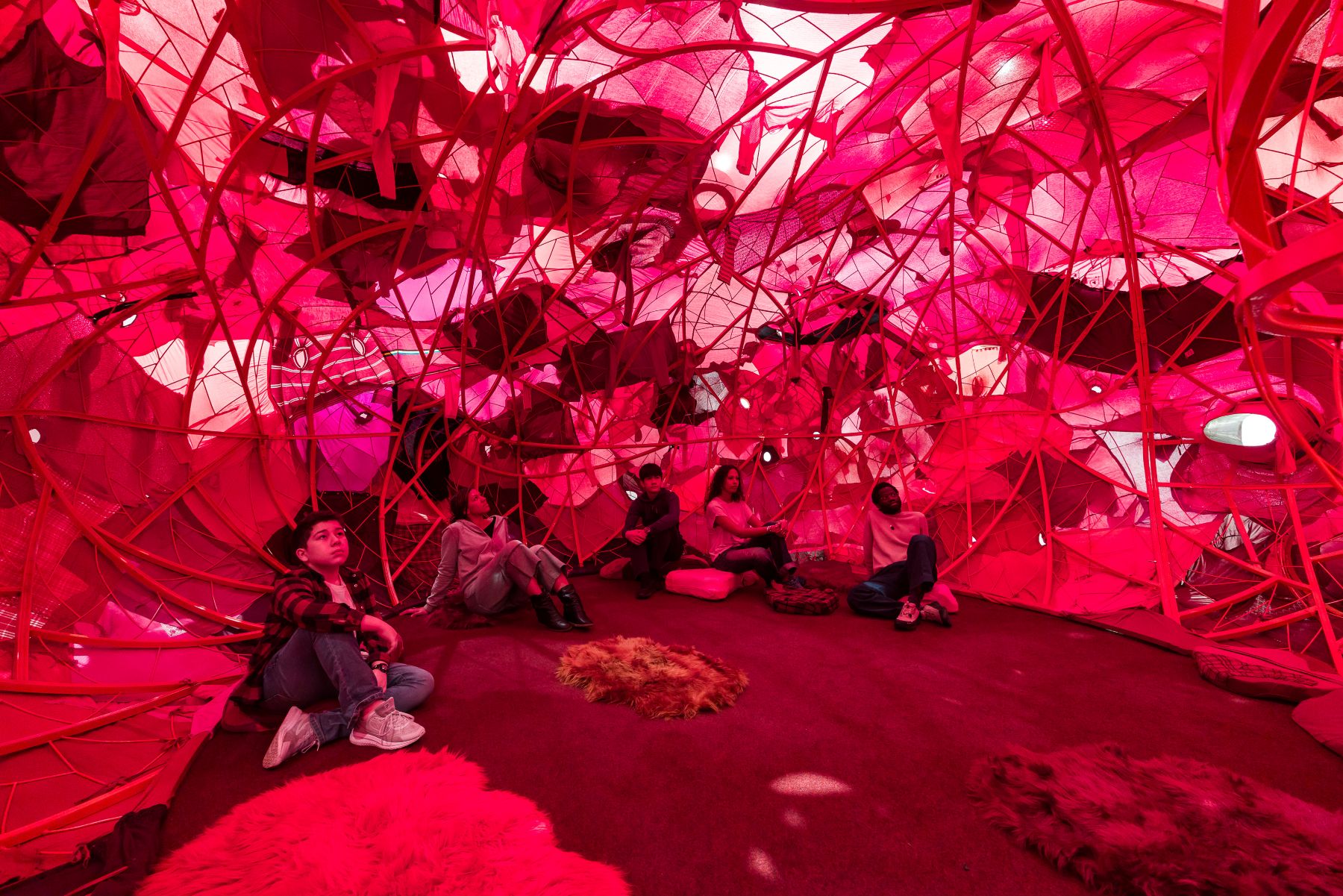
EN: The title commission, Heart to Heart, is perhaps the most immersive work in the show. Constructed from collected garments in warm reds, oranges, purples and pinks, it takes an abstract form of an anatomical heart, large enough to enter and sit inside. The floors are carpeted in clothing too, and metallic flourishes around the upper structure resemble the aorta, offering glimpses both in and out. It is the notion of second skin made entirely literal. How does it relate to Yin Xiuzhen's wider practice?
YM: In the other gallery, there is an early work from 1995 where she began using her own clothes, from childhood through to adulthood, to tell her personal history. But very quickly after that, she started to collect garments from other people. For her, it is really about collective lived experiences. It is not just her bearing witness of what is happening around her, but people as a whole.
She invites people not just to contribute their garments, but to go inside her work, to become participants in her performances. The Heart to Heart commission embodies that invitation completely – you are not observing the work so much as being held by it.
I think she is ultimately a really hopeful person. Having others together as a collective is not just about the past, but about trying, together, to strive for a better future.
EN: Upstairs, walking into Chiharu Shiota's Threads of Life for the first time is a remarkable physical experience; those red threads filling the entire room feel like a nervous system made visible, or a living root network. How would you describe her practice to someone encountering it for the first time?
YM: I often say that Shiota is not a conceptual artist. Her work is very concrete, very emotional, very sensual. It is about the experience. She creates these otherworldly environments for people to enter into, to be immersed in. And versions of this installation have existed before. I see her practice as almost like an organic, living thing. Each time she goes somewhere new to make a work, it changes. It is always based on the space, and the emotions she feels at that particular moment.
And I think there is also a connection to Buddhist thinking here (she might not agree with me) but the way I look at it, when she uses old materials, she is giving light to them again. When you think about reincarnation, that is quite fitting. Each time her work appears, it is a different incarnation.
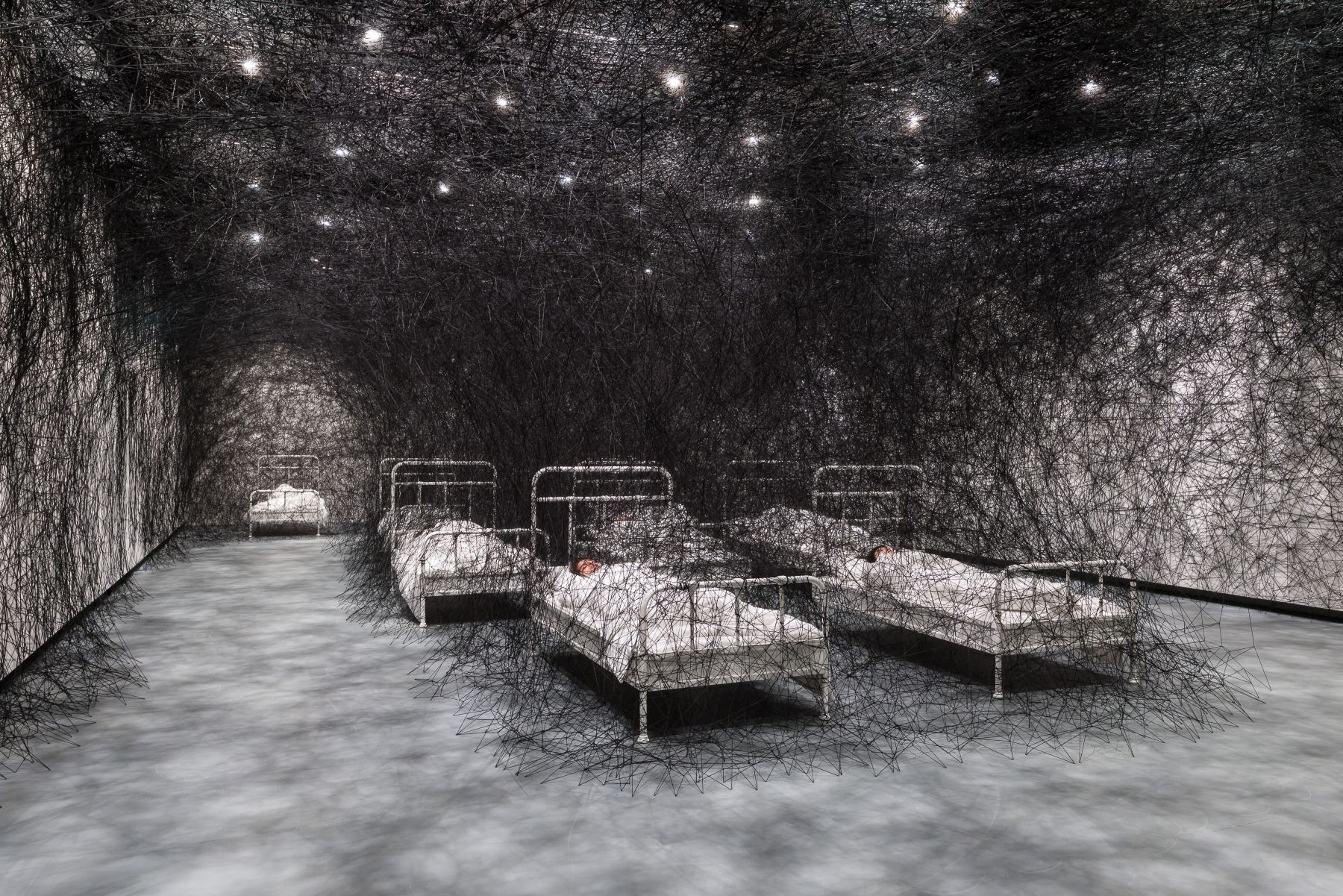
She uses a lot of found materials; she goes to flea markets all the time. When I was at her studio last year, there were old passports everywhere, old sunglasses, keys. For her, the keys are almost like tiny human figures. The threads connect them all. We have 20,000 keys here. She installed all of them herself, with a team of around thirty people, working tirelessly for two weeks.
In this installation, there is also a set of old wooden doors that serve almost as a portal; by stepping over the threshold, you are entering further into her world. And perhaps one of the keys opens the door...
EN: The second installation, Letters of Thanks, carries a very different emotional weight. To walk through and read letters that strangers have written to the people they love. It is an intensely intimate and individual experience, but also a profoundly shared one. And one, I understand, that will continue to grow long after this exhibition closes. Can you tell us where it came from?
YM: The work was first conceived in Japan, when Shiota had a show in Kochi, the place her parents came from. During the installation period, her father became quite ill. She felt that she had never said enough thank yous to him. So that became part of the narrative of the work, and her wish to express her thanks to her dad.
After the exhibition, she decided to open it up to others. Each time the work is shown, she asks the institution to collect thank you letters from the public to be added to the installation. The letters can be addressed to anyone, or anything; it is just the idea of being grateful for something. And once a letter is submitted, it enters her archive, so those letters reappear each time the work is shown.
We have letters here in German, in French, in Japanese, from previous exhibitions. The ones from London will now become part of the life of the work as well.
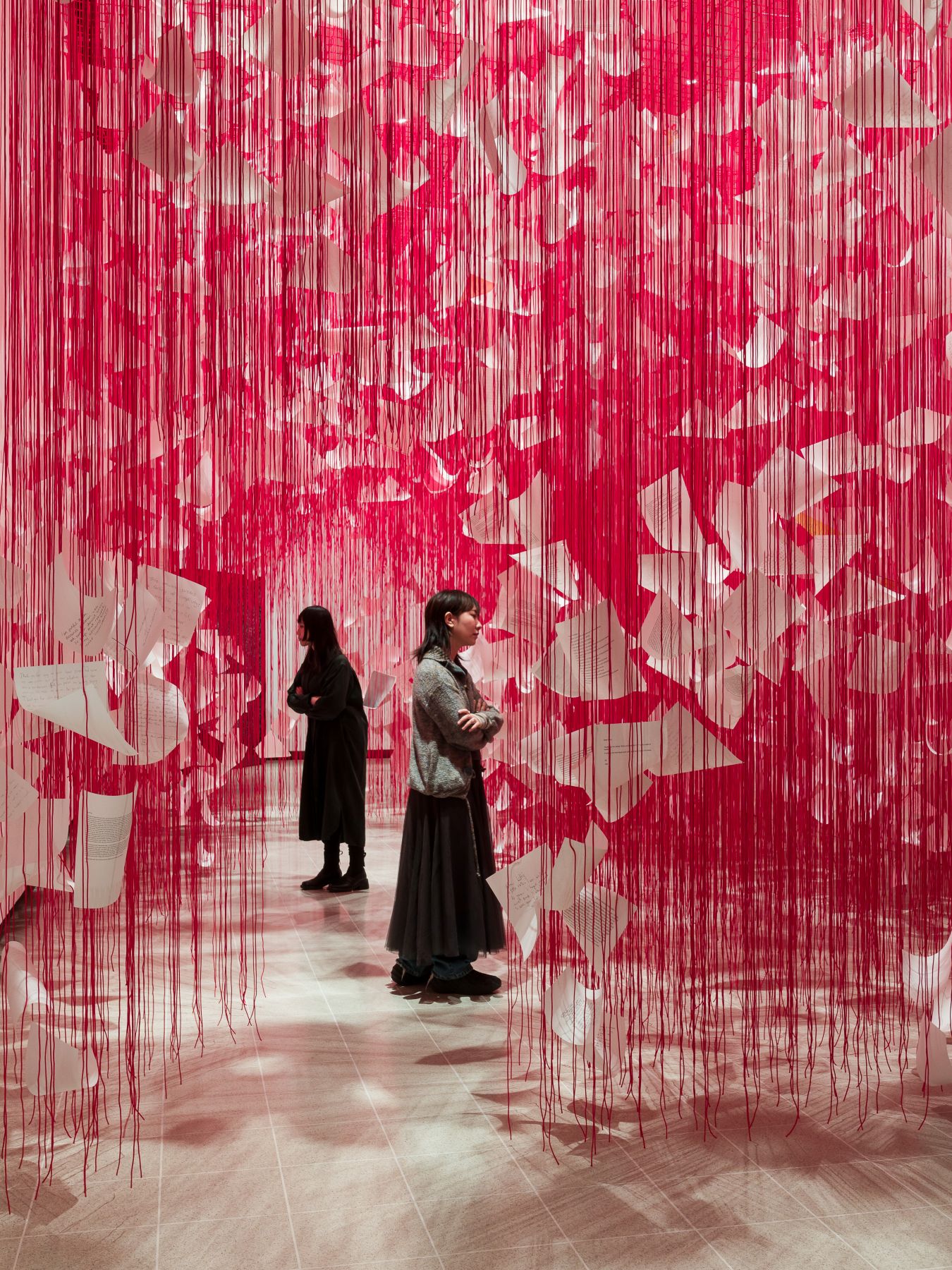
There is something quietly remarkable about that image: a letter written in London, by someone you will never know, travelling forward into a room not yet built, in a city not yet decided.
Both exhibitions leave you with a similar feeling – that the lives we live, however ordinary, leave traces we are rarely aware of. That a garment, a key, a word of thanks can outlast us, woven into an experience shared by people we will never meet. That we are, each of us, already part of a tapestry larger than ourselves.
Heart to Heart and Threads of Life are on show now at Hayward Gallery, London until 3 May 2026.
By Elise Nwokedi