What Makes a Home? Do Ho Suh's Journey Through Memory and Space
Do Ho Suh's new Tate Modern exhibition reveals how the places we live shape who we become, and how we carry them with us wherever we go.
Think of your home for a moment.
Is it the place you are currently living, with its windows that seem to be perpetually mucky, creaky door hinges, insufficient plug sockets overrun with a mess of wires? Is it the place you grew up in, with the light switches you couldn't quite reach, markings on the door frames detailing the centimetres you grew over the years? Is home the walls that contain you or the layers of history that have seeped into them? The conversations had, the memories made, the lives lived.
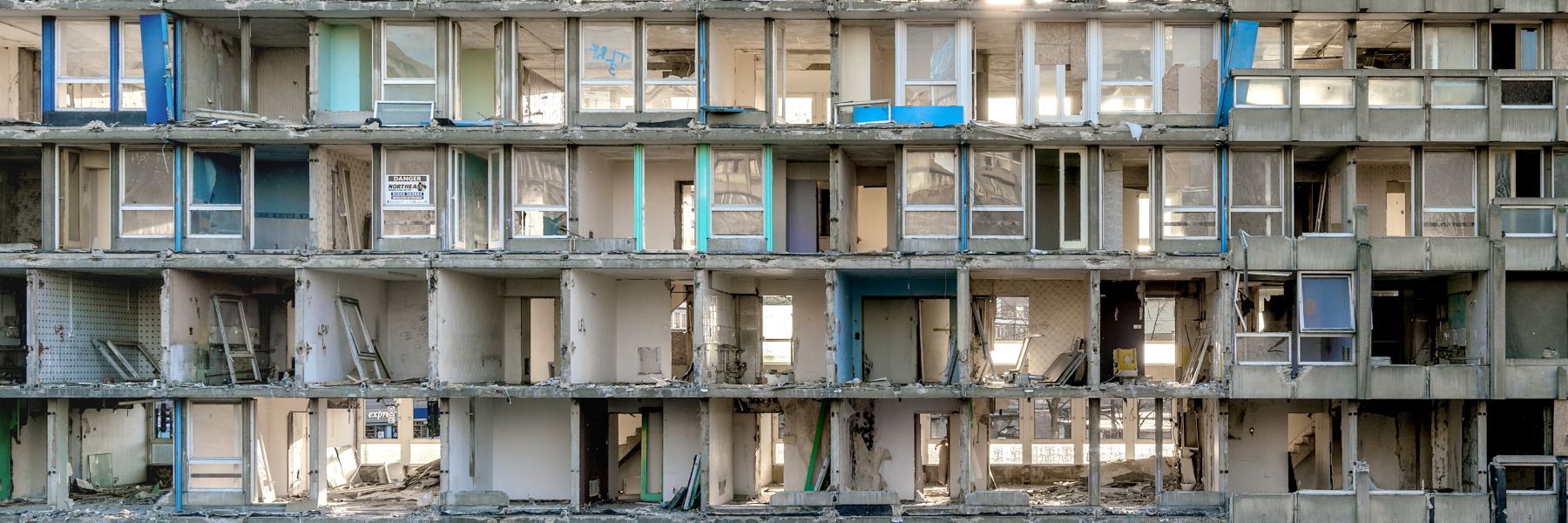
In The Genesis Exhibition: Do Ho Suh: Walk the House, currently on display at the Tate Modern, the Korean artist examines that notion of 'home' reflecting on the idea of relocation, reconstruction and remembrance. With a career that has spanned three decades, the exhibition examines Suh's work across his 'home' cities: Seoul, New York and London and the relationships between architecture, space, the body and memory. His response to these questions transforms architecture into a way of exploring how we carry places within us, and how places, in turn, carry us forward through time.
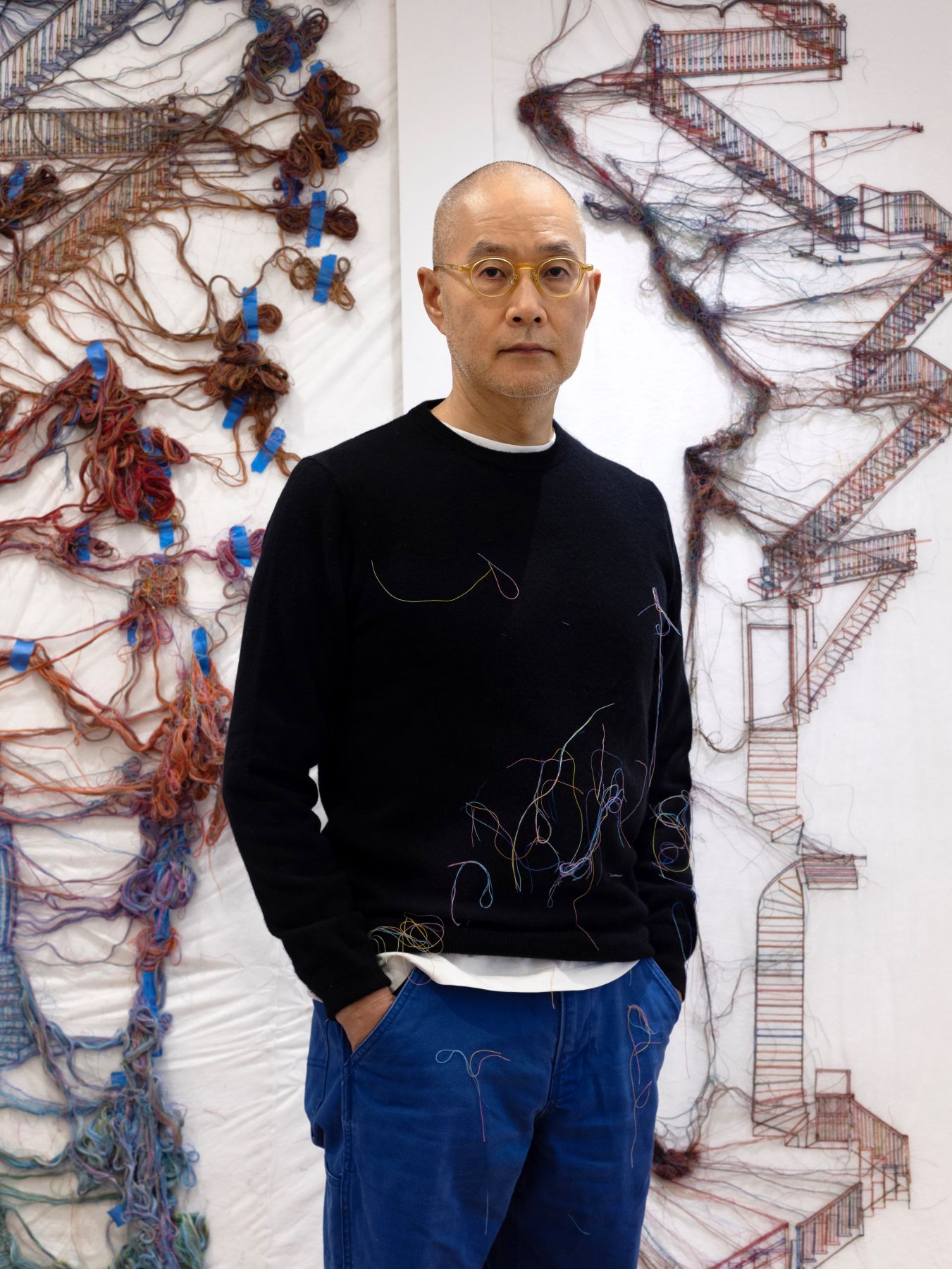
The exhibition's title comes from a Korean expression Suh heard as a child from carpenters building his family's hanok in Seoul. These traditional houses could be disassembled and reassembled in new locations, literally walking the house from place to place. For Suh, this phrase captures something essential: how we carry multiple places with us across space and time, and how the boundaries between past and present homes become blurred.
Memory amalgamates in these spaces and memories shape our perceptions of them. Yet, they’re not stagnant. They’re not foreclosed environments in my work. They’re transportable, breathable and mutable
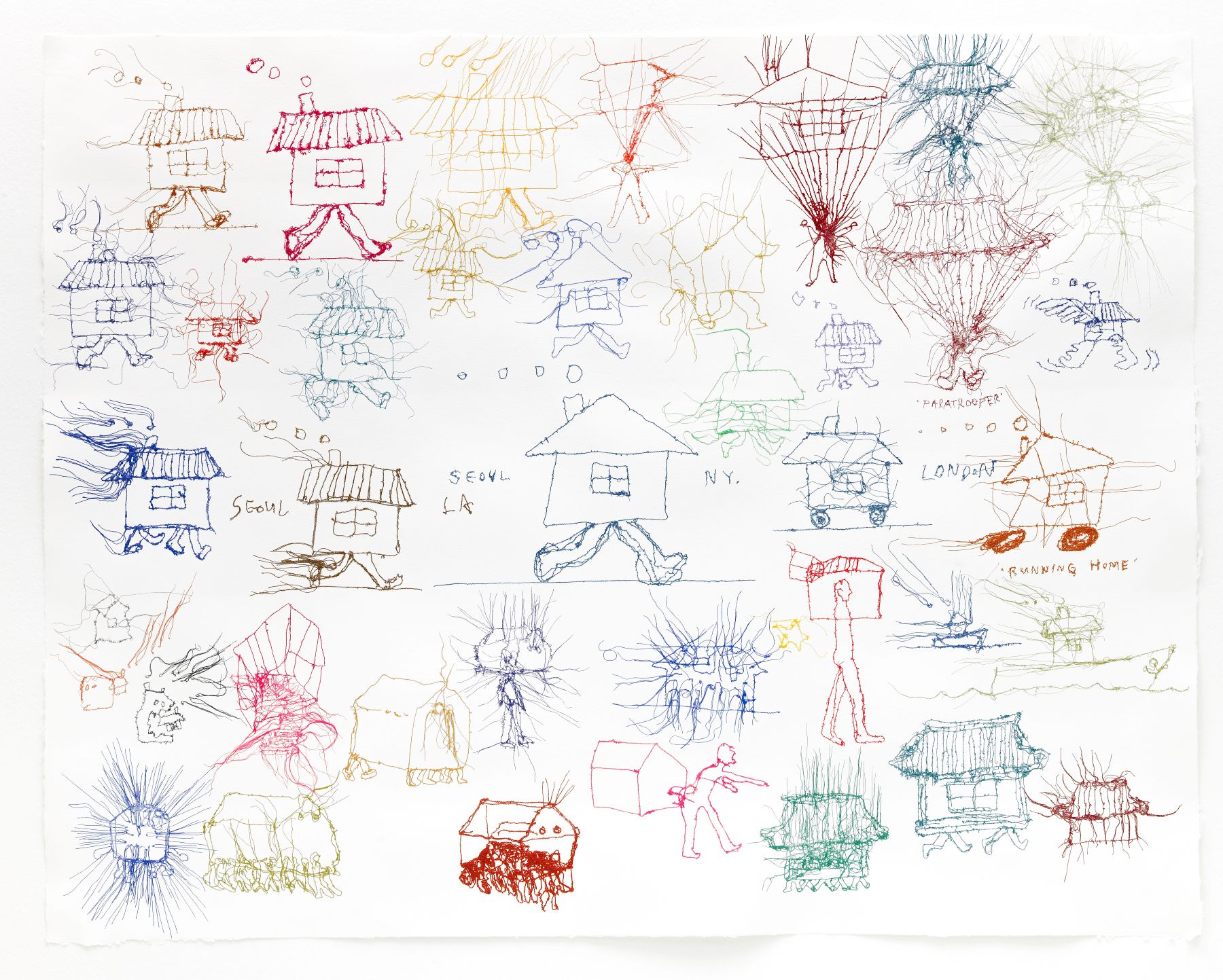
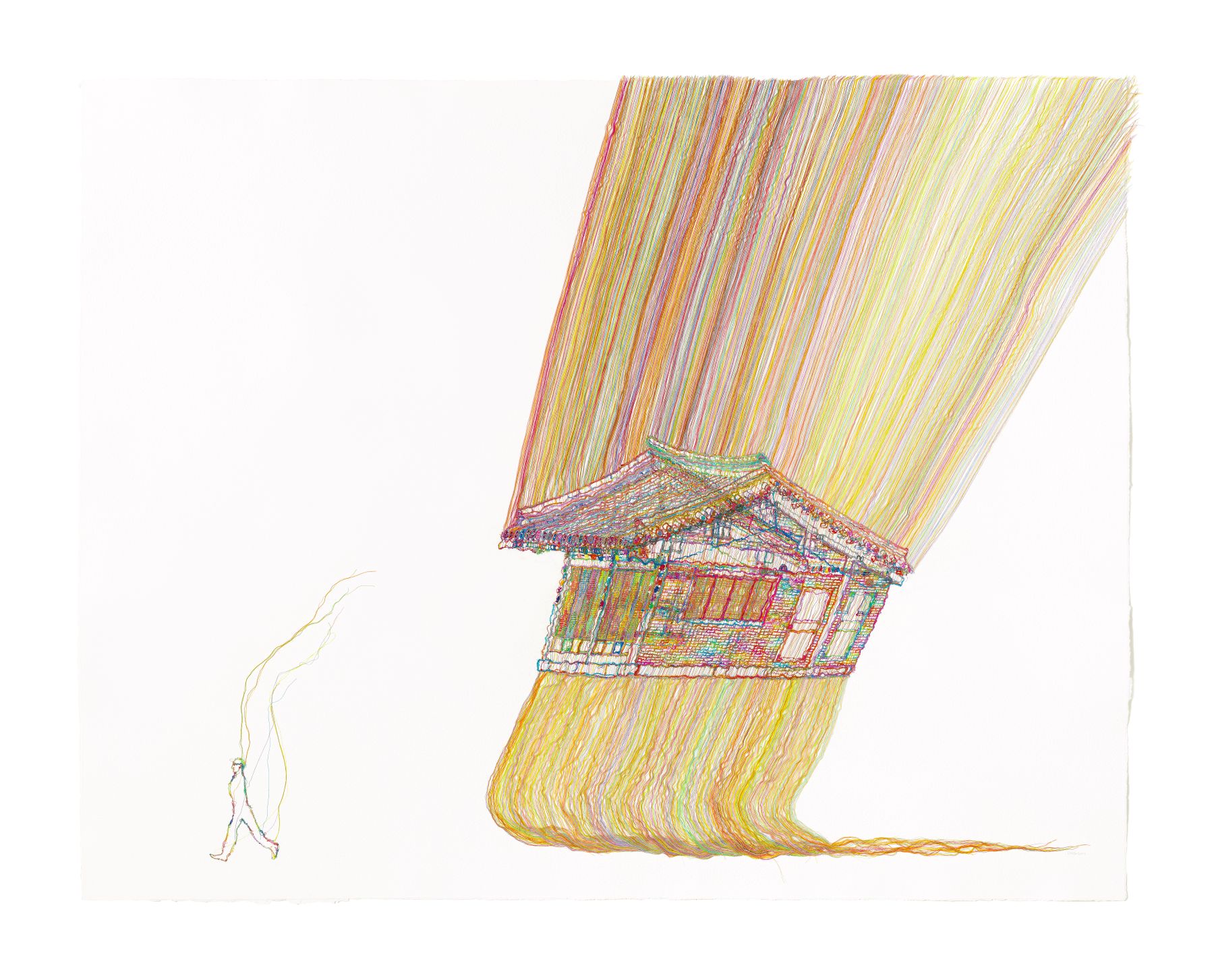
A house has sprouted legs and is on the move.
Like a snail slugging its way across a garden path or hermit crabs skuttling across sandy beaches, the moving structures in Suh’s thread drawing My Homes embody this sense of being ‘transportable, breathable and mutable’. Across Seoul, L.A., N.Y. and London, they at ‘running home’, haunting Suh as he moves through the world. Some are stereotypical stacked squares and triangles, some have wheels or are boats or paratroopers. And some reflect the 1970s hanok home that Suh grew up in.
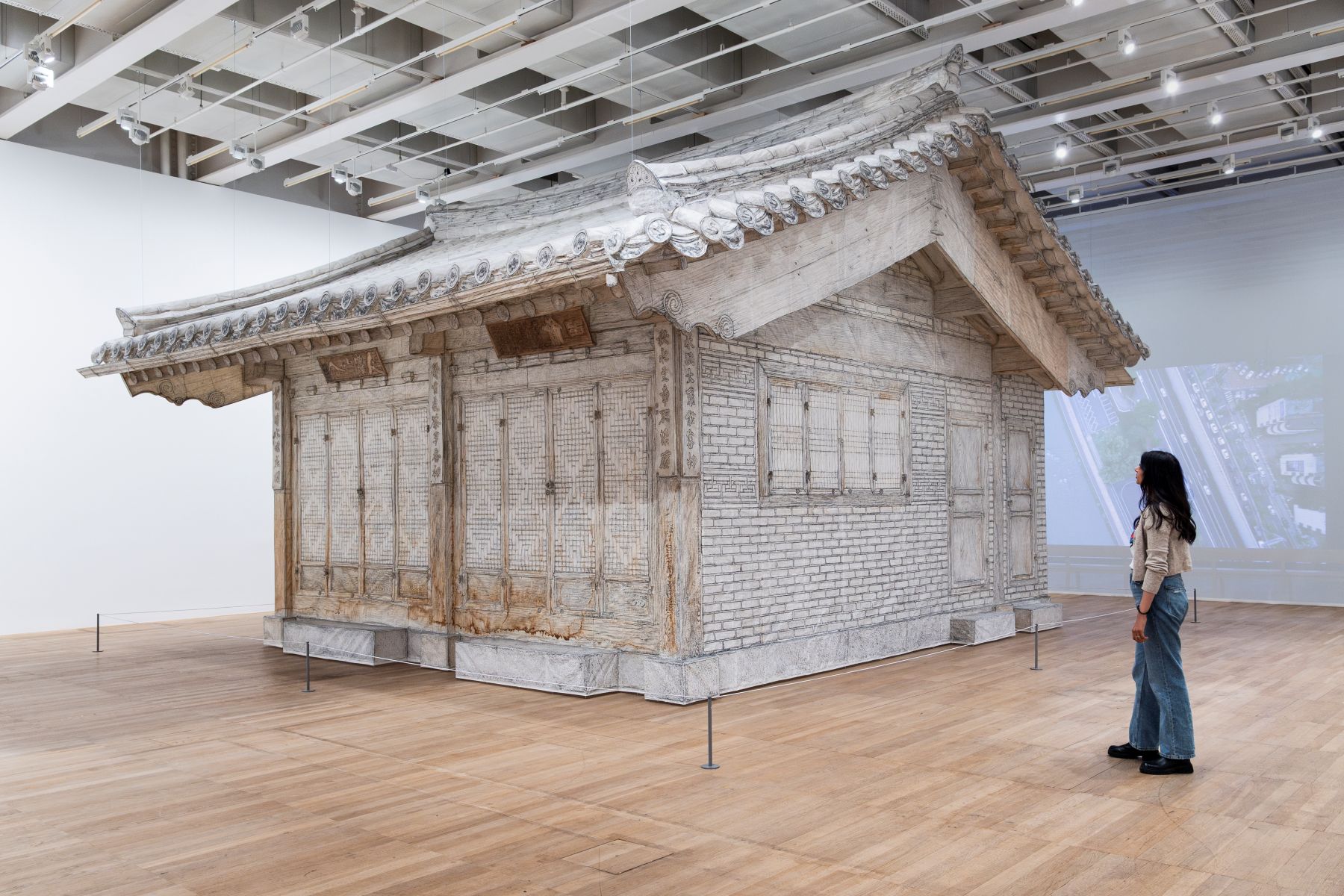
Suh returns to the hanok motif across his practice, reflecting his desire to ‘fit my childhood home into a suitcase’. This is directly reflectied in the piece, Rubbing/Loving Project: Seoul Home (2013-2022). This meticulous documentation of his childhood hanok involved covering the exterior in mulberry paper and rubbing every surface with graphite. The idea of 'walking the house' has been transposed and made literal: Suh's rubbings have similarly been deconstructed and reconstructed in exhibitions across continents.
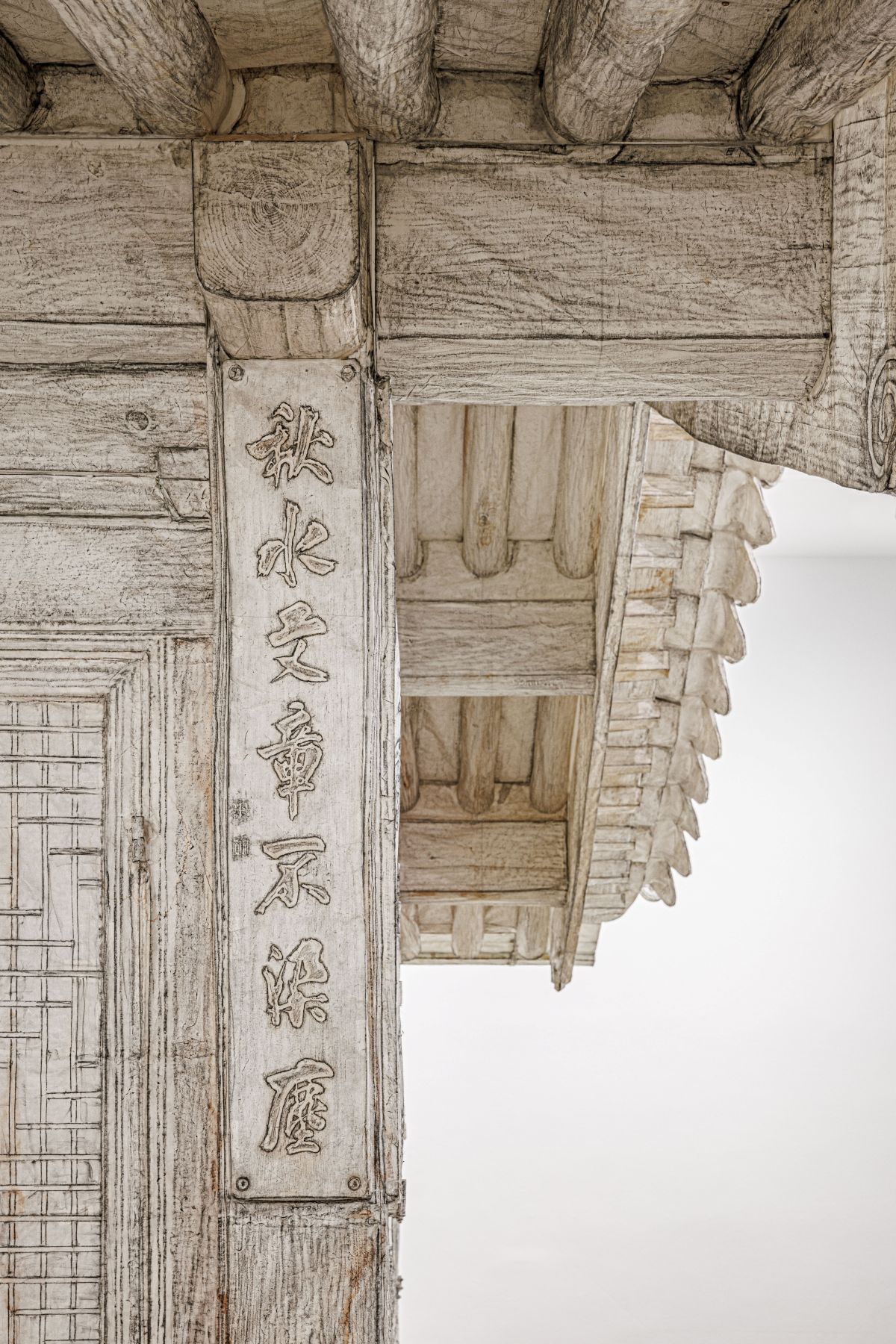
There is something deeply physical and almost ritualistic in this act of rubbing. Watching the video of the process, Suh is almost embracing the space, caressing its edges, grooves and textures.The technique emerged as a way of feeling through space, then became a method for exploring 'what is concealed or redrawn through memory'. The process speaks to the sentimental amongst us who refuse to throw away birthday cards, childhood scribbles or stuffed animals, understanding intuitively that the physical contains the emotional, the memory. These memories exist in temporal space but are made tangible through the physical act of reconstruction.
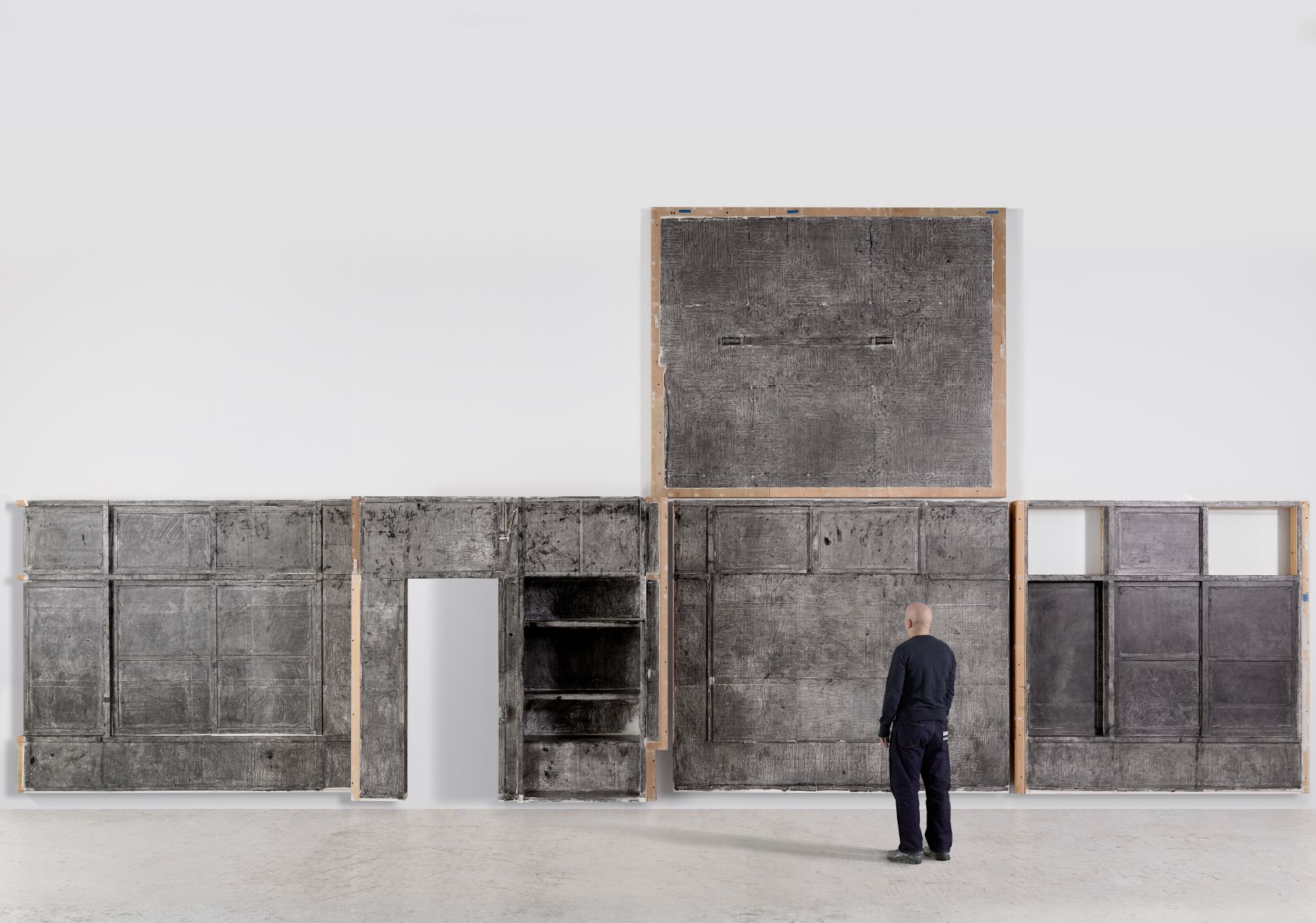
It is an act of care, of preservation a ‘loving gesture’, that he has repeated with other projects such as Rubbing/Loving: Company Housing of Gwangju Theatre. In this piece, a blindfolded Suh and assistants created rubbings of interior surfaces at a site that lay empty after student-led protests were brutally suppressed by authorities in May 1980. Here, the loving gesture becomes an act of solidarity, of witnessing a moment in history that has been censored, now existing only in collective memory.
'It was not a performance, but there was a deeply moving sense of ritual, or commemoration,' Suh reflects. Poignantly, he and his assistants all missed one corner of the room, inside the shelves, as if an energy resisted their touch. This moment demonstrates how architecture becomes a place where both personal and collective memory lives. Every room we enter is woven from the layered experiences of those who came before, and that we too contribute threads to this rich tapestry for those who will follow.
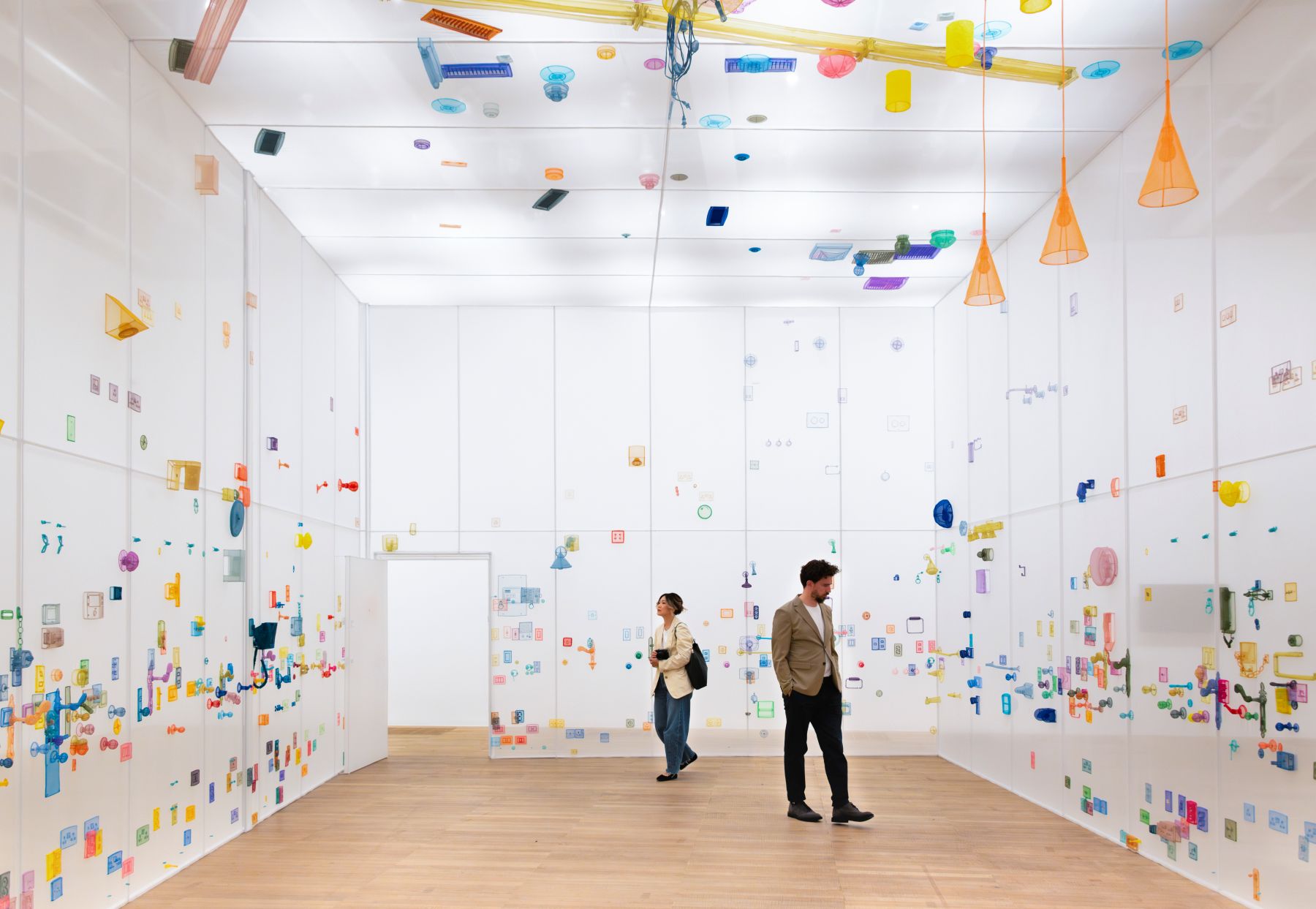
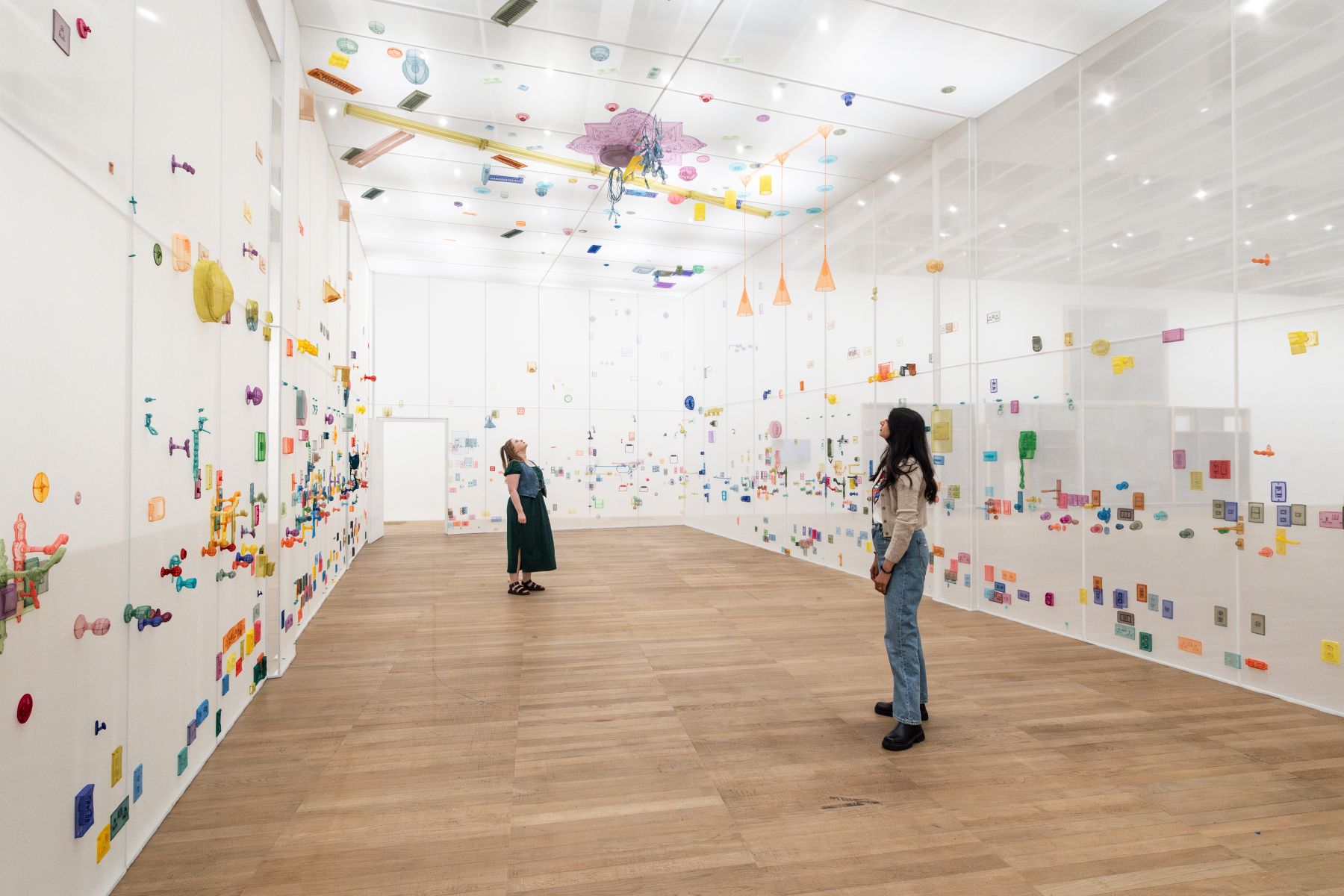
This sense of tapestry is realised in Perfect Home: London, Horsham, New York, Berlin, Providence, Seoul, 2024. The piece, a 1:1 scale recreation of an interior room of Suh’s London home and studio, is a palimpsest of experiences, with a splattering of colourful polyester domestic fixtures like light switches and plug sockets that Suh calls ‘specimen’ spread across the translucent white netting walls. The ‘specimen’ are replicas from all the places Suh has lived in his life, projected and woven onto the walls in the correct positions using traditional Korean sewing techniques.
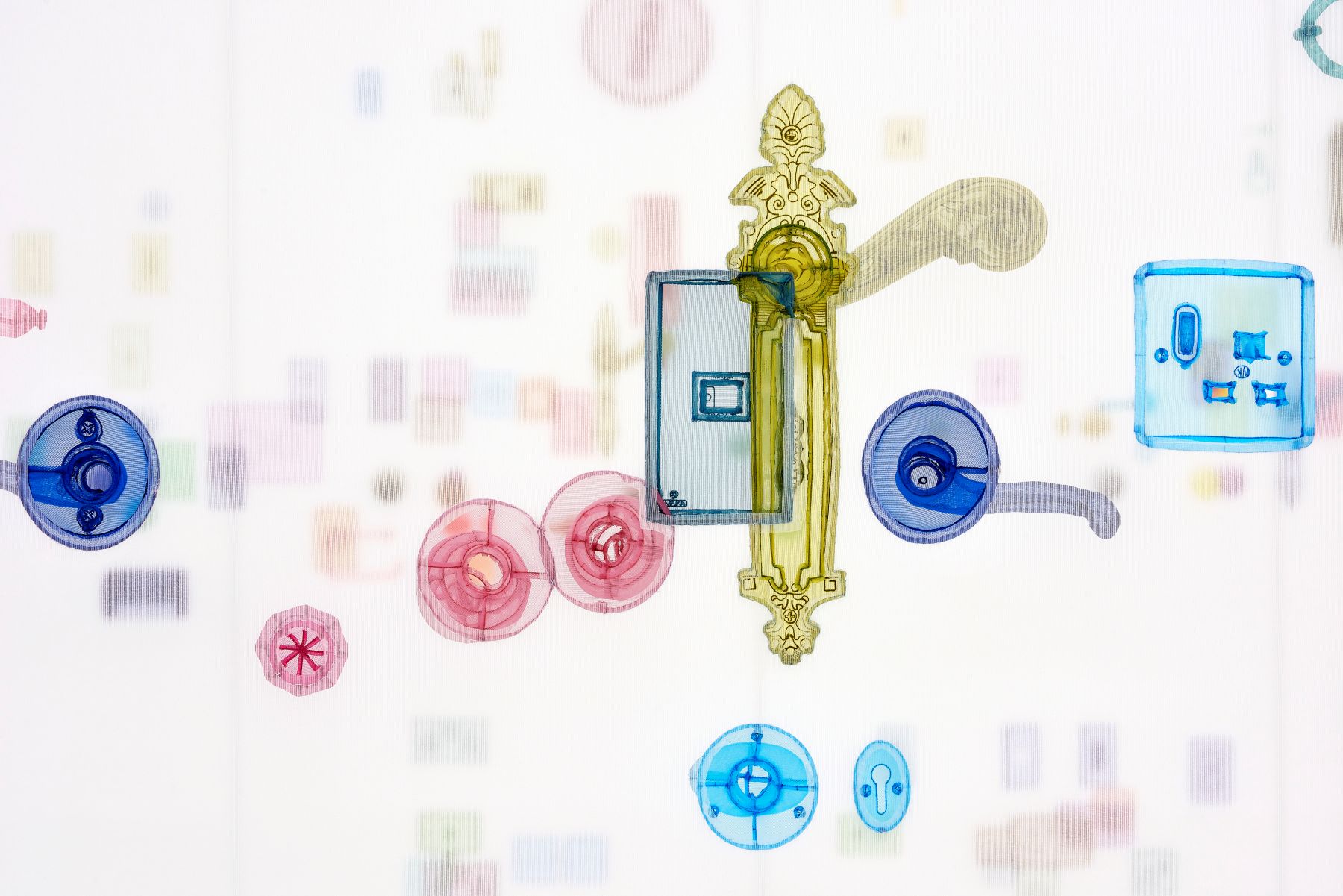
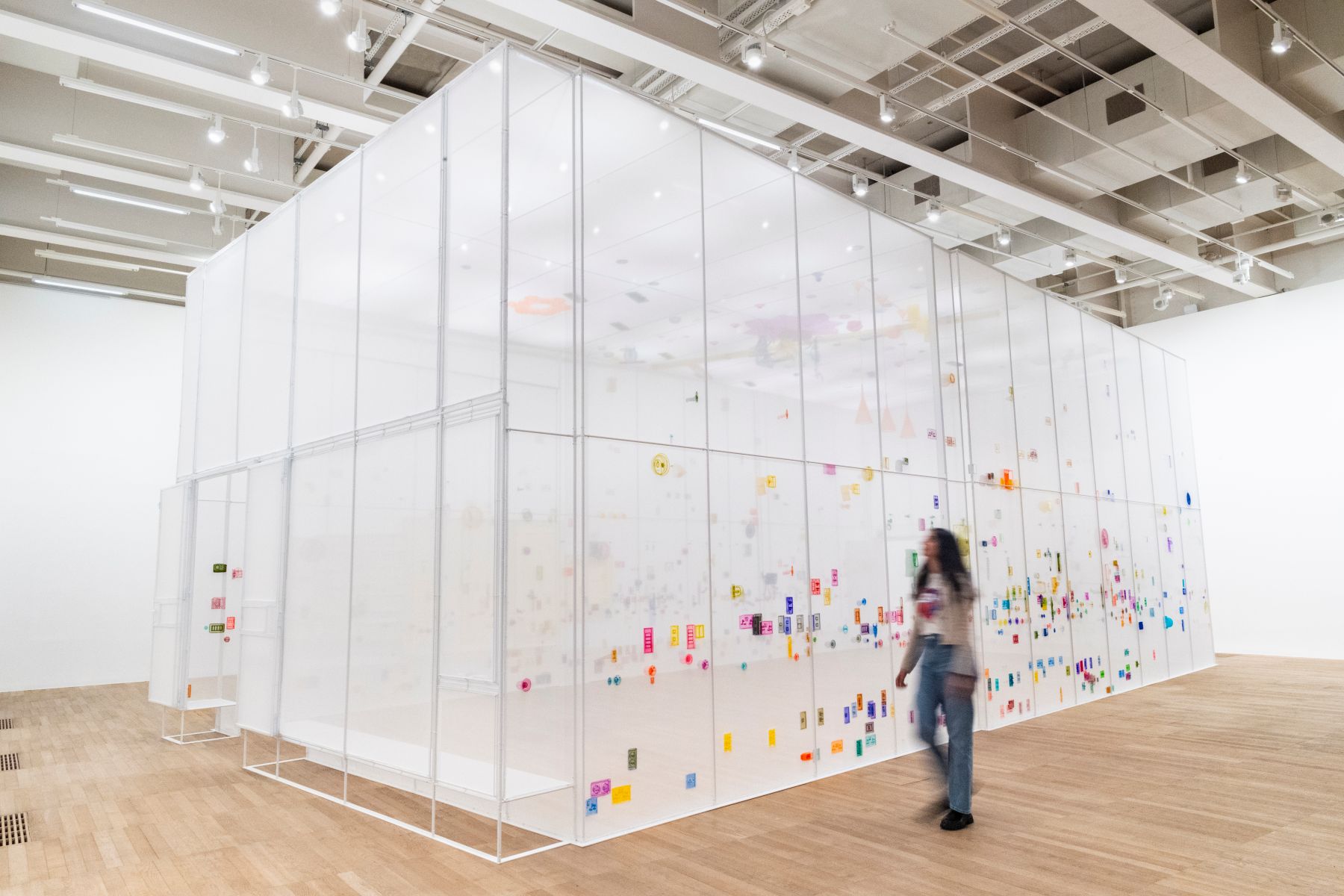
I could only make this work at the age I am now. It’s an accumulation of time, experience and movement through the world’
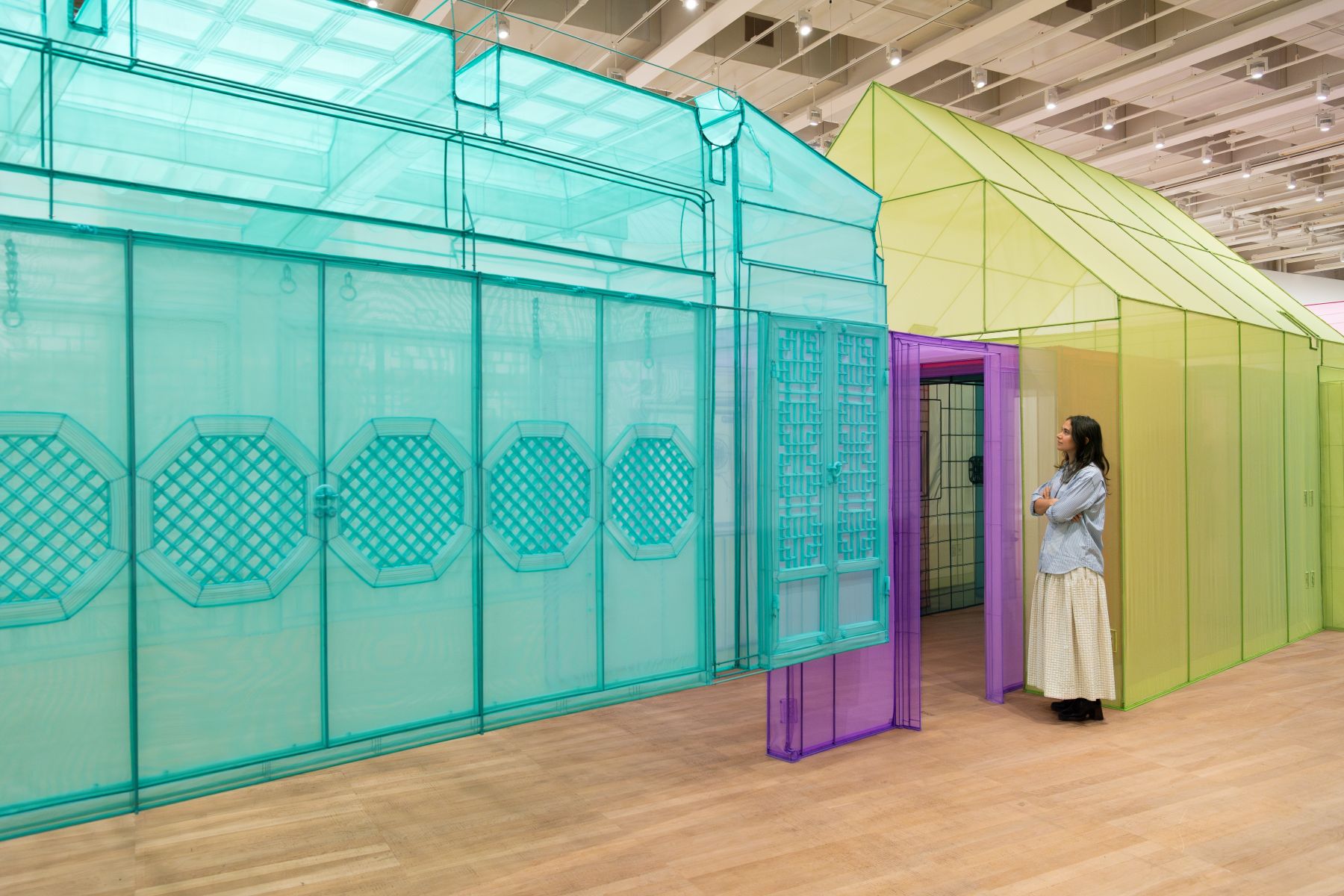
Similarly, at the centre of the exhibition stands Nest/s (2024), where Suh has stitched together rooms from buildings in Seoul, New York, London and Berlin to form one continuous, impossible architecture, neither fixed in place nor time. Walking through this 'fabric architecture', you become aware of your own body in space, how you move differently in a kitchen versus a bedroom, how doorways frame and direct your passage.
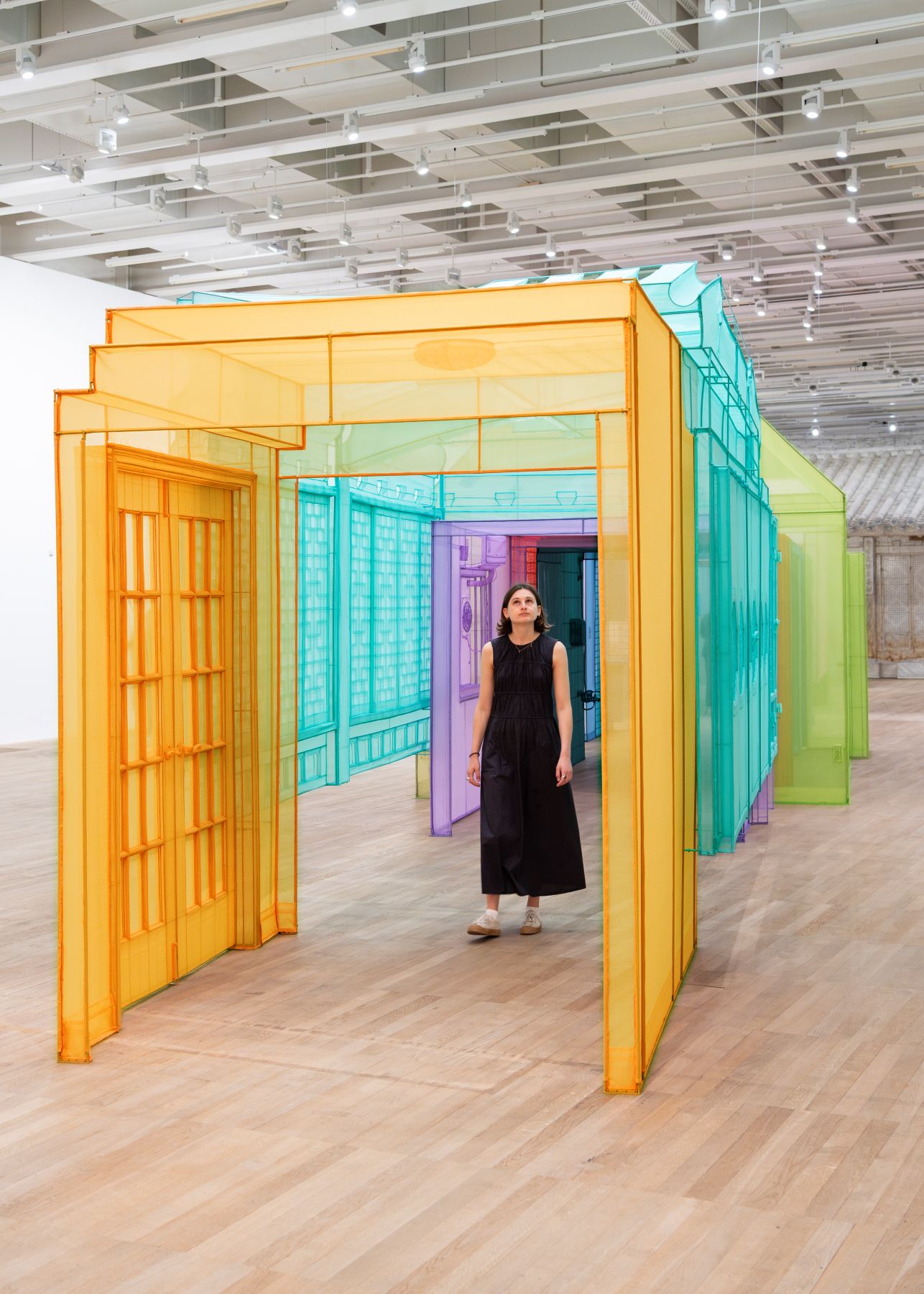
Suh's choice of fabric is a deliberate decision that communicates what he calls the 'subjectivity of memory'. The material allows you to see through whilst containing you, creating a feeling of being temporary yet rooted. Your breath passes through whilst the space itself seems to breathe. By constructing entire architectural spaces from these materials, Suh suggests that buildings, like bodies, have permeable boundaries rather than being fixed containers. They absorb, retain, and transmit the experiences of all who inhabit them, activated by people moving through them.
As Suh reflects: 'I think of all the switches and sockets in a building, how much energy must accumulate in these forms.' Architecture becomes an act of collaboration, shaped by countless connected interactions, each adding texture to the rich layers of human experience.
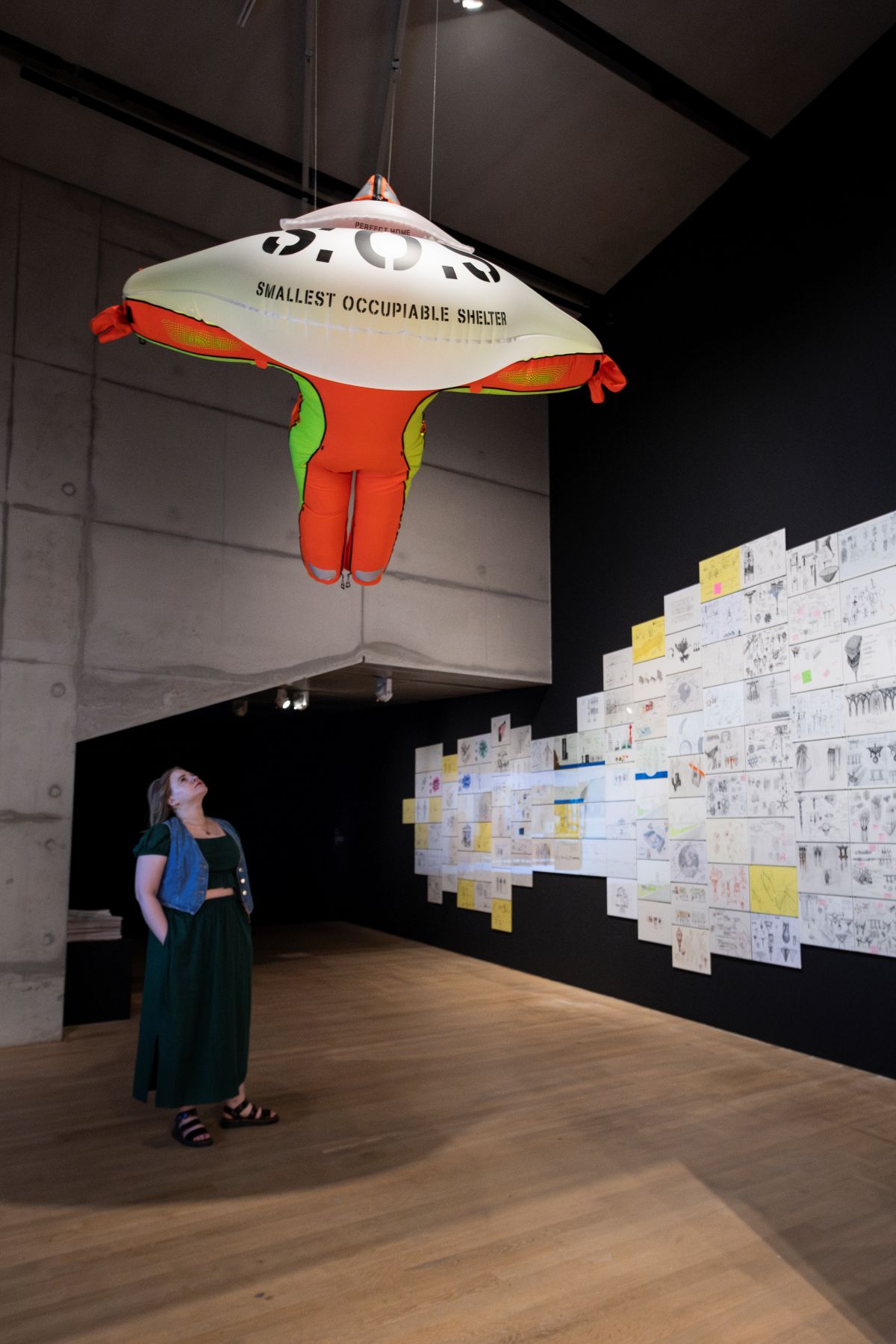
In his speculative Bridge Project (1999-ongoing), Suh proposes an impossible architecture spanning oceans to connect his three home cities. As he notes, 'I don't have a fixed concept of home, it will continue to evolve.'
In a world marked by upheaval, the very notion of a 'perfect home' reveals itself as an impossibility. Yet this becomes the project's strength, reminding us that the most important homes we build may not be physical structures at all, but the networks of care, memory and connection that we weave between the places and people that matter to us. Perhaps Home is not something we find or lose, but something we continuously create. What spaces do you carry within you?
Catch Do Ho Suh: Walk the House at the Tate Modern until 26 October 2025. Tickets are £5 for Tate Collective. 16–25.
By Elise Nwokedi