Jeremy Deller: A Mirror to the Present
For the fourth annual RIBA and Grimshaw Foundation Art Lecture, Turner Prize-winning artist Jeremy Deller reflected on culture, art, and a nation in crisis.
Ask almost anyone to name Britain’s most famous structure and the answer, more often than not, is Stonehenge: a mythologised monument that has been on the national mind for thousands of years and yet still refuses to explain itself. That mix of permanence and mystery is exactly what draws Jeremy Deller to it. We know only two or three per cent of what really happened there, he told the audience at BMA House, and for an artist, that is the whole appeal. The emptier the history, the more room there is to play.
‘Archaeology, the study of the past, is actually the study of the present,’ he argued. ‘It’s about us as we are now.’ How we picture the people of the past is really ‘all our anxieties and worries put onto’ them. We can view Stonehenge as a Mirror (a chapter from Deller’s book), as when we look at it, we are looking at ourselves: our national identity, our relationship to something higher, our need for a story.
That notion of a mirror runs throughout his work. His subjects are staples of British identity: the stone circle, the picket line, the war memorial, the national collection. Each becomes a surface in which the nation catches sight of itself, with the result inverting what, and who, a monument is for. Where art so often becomes a fixed thing that people travel to, Deller takes history off its plinth, makes it mobile and participatory, and sends it out to find us.
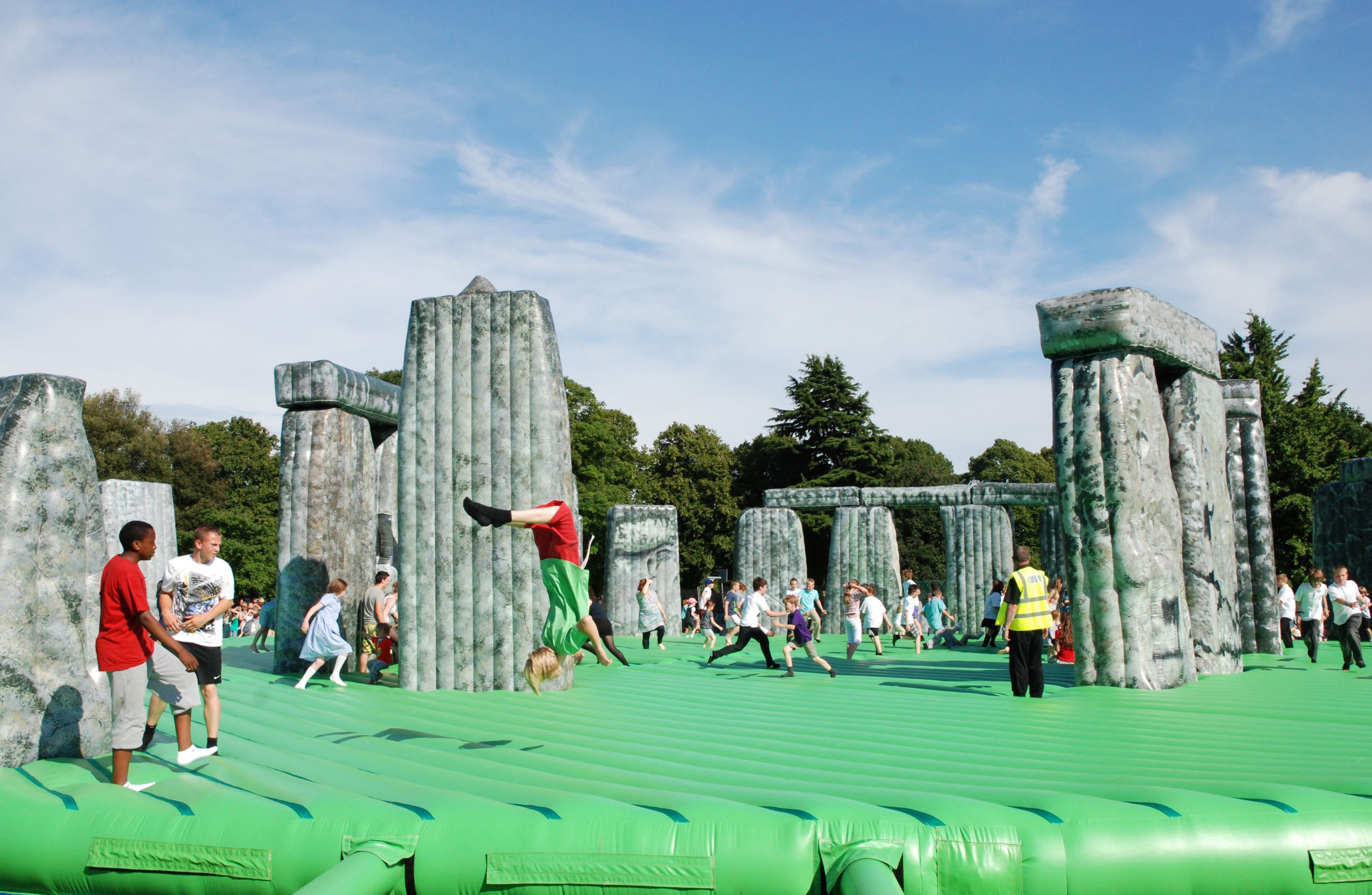
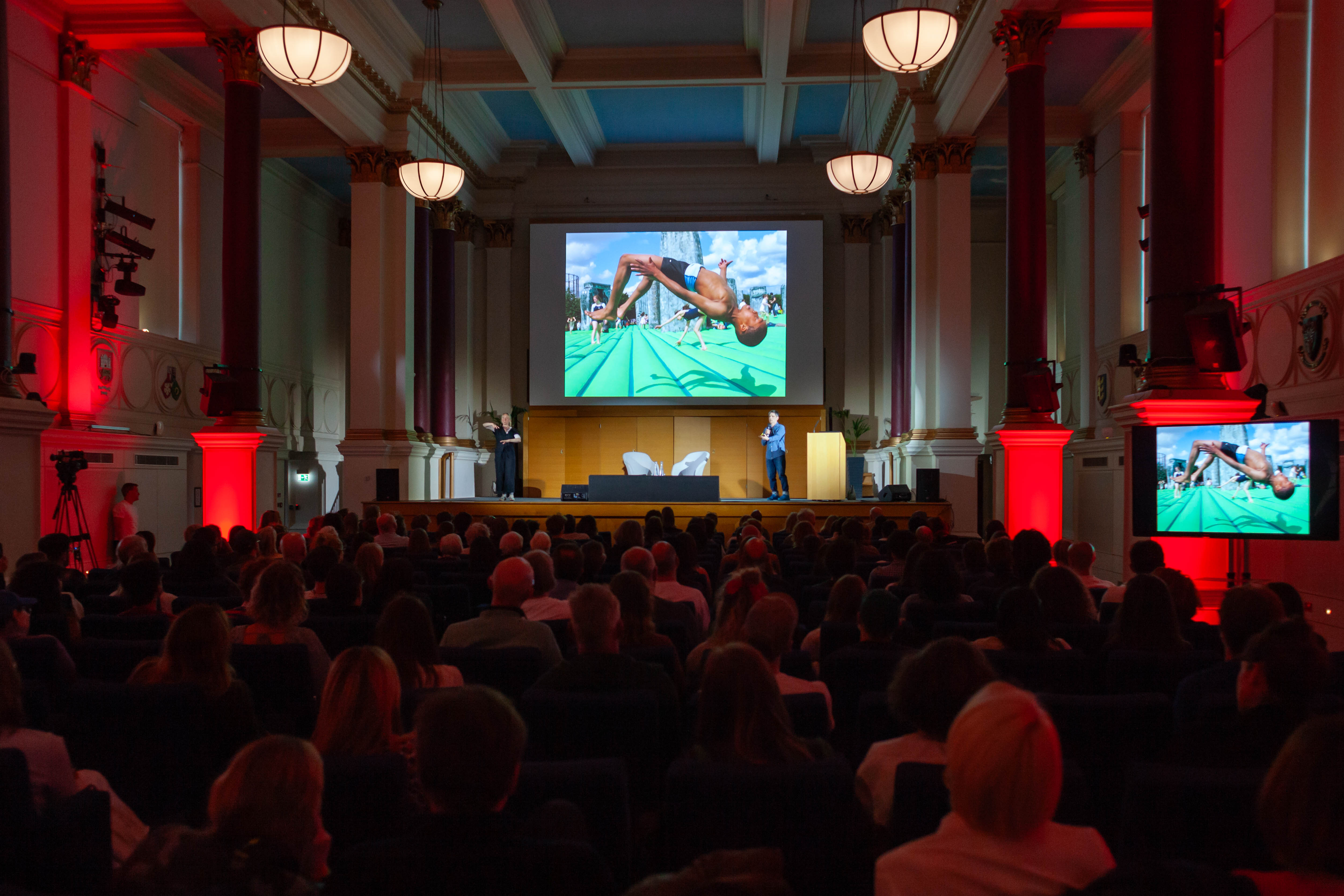
Take Sacrilege (2012), the full-size inflatable Stonehenge created for the Cultural Olympiad. It is an idea only two words long, yet for Deller the idea is everything. With Sacrilege, Deller turns sacred into silly. At the real Stonehenge you can barely get near the stones; here you could jump on them, for free, and people queued happily. ‘It is a tactile relationship with our past,’ he said – history experienced through the body. Children and adults alike bounced, flipped and fell over: a release of inhibitions not far from what happens at the real site during a solstice. The point was never explanation but access, thousands of years of unanswerable history turned, by way of a bouncy castle, into something you could kick your shoes off and fly over. The mystery survived intact. A national identity built on a question rather than an answer, Deller suggested, might be the most welcoming kind there is: ‘We’ll never know. That’s the beauty of it.’
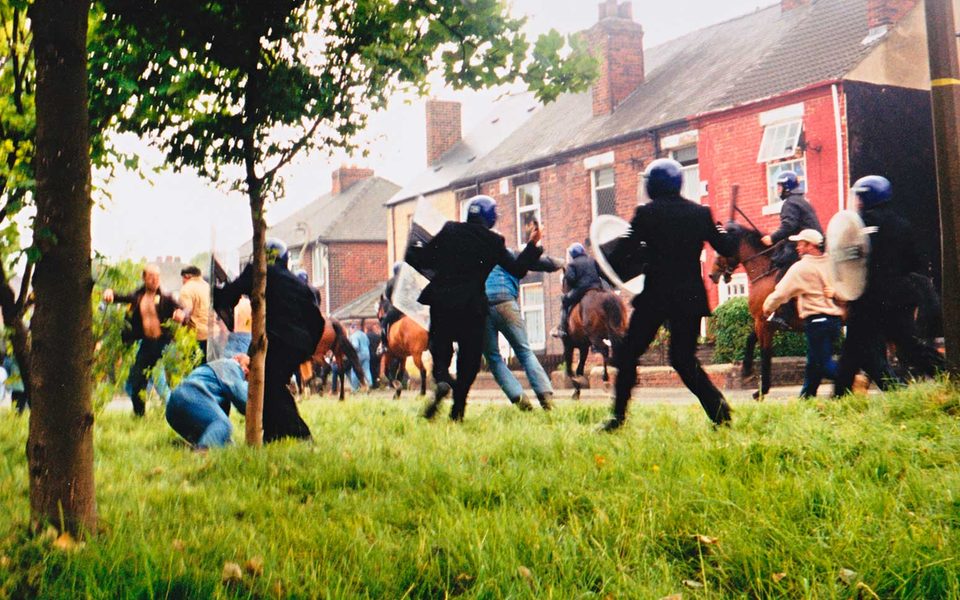
If Sacrilege is that experiment at its most joyful, The Battle of Orgreave (2001) is the same notion of the experiment at its most raw. Deller restaged the violent 1984 confrontation between striking miners and mounted police with a cast of a thousand that included former miners who had been there and, extraordinarily, former police. It was not a documentary reconstruction but ‘a cover version of something that happened. Something terrible had happened.’ The point was to make the past present enough to reopen it, ‘to make people angry, or angrier, about what had been going on.’ Yet when he later showed the footage to teenagers, they couldn’t comprehend it. Why were all these white men fighting each other in a field? One wondered whether it was a protest about climate change. What does it say about our national memory that barely a generation is enough for the thread to fray?
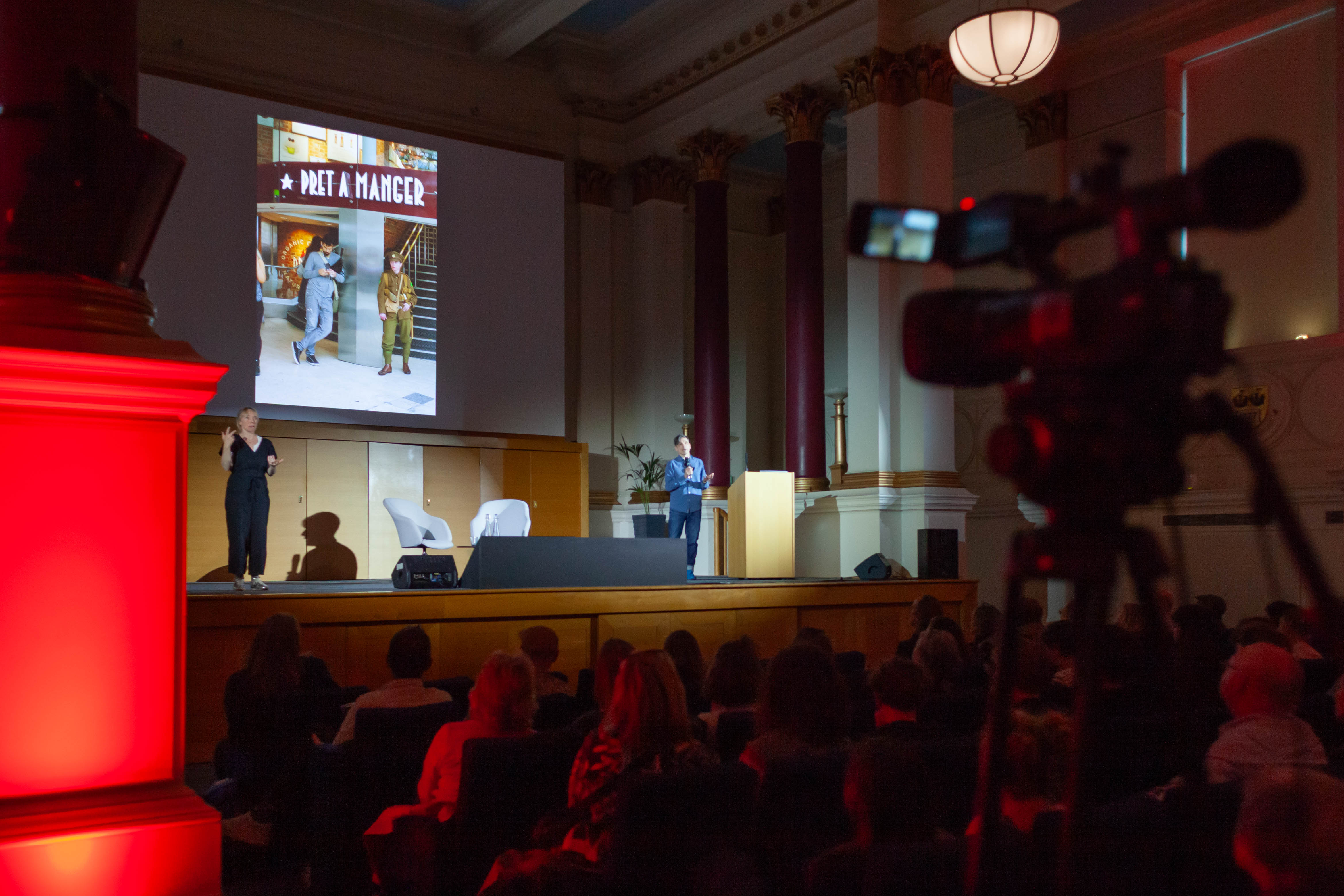
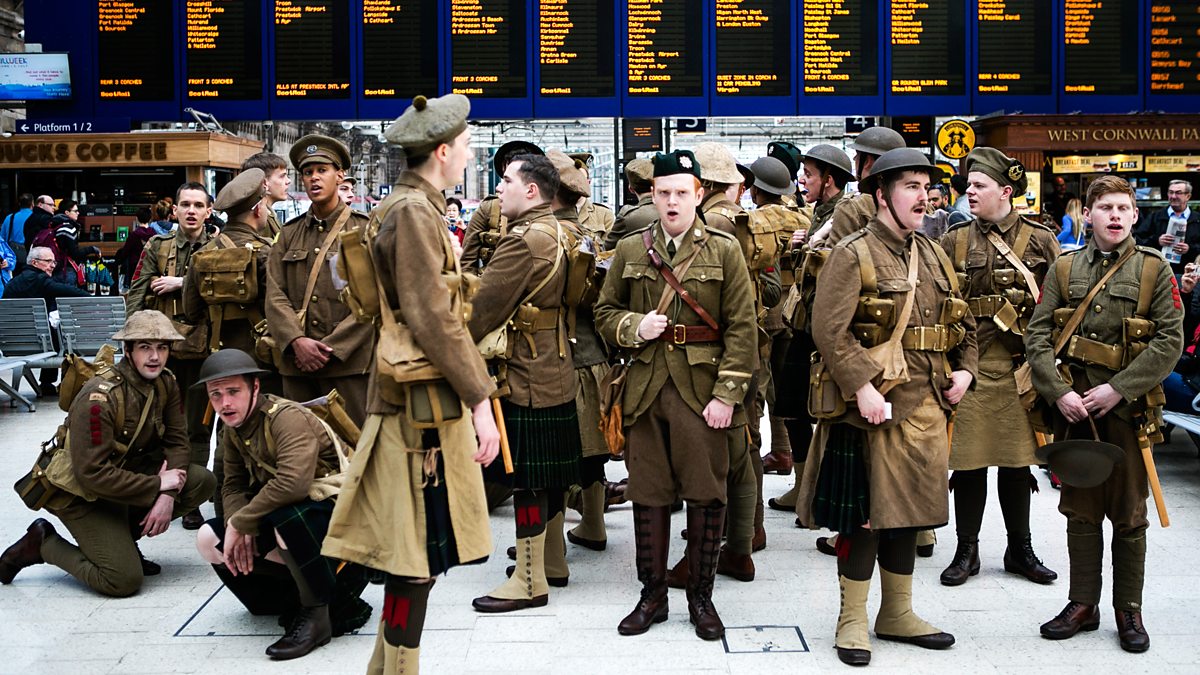
The same instinct, to make the past present and let the encounter do the work, produced We’re Here Because We’re Here (2016). To mark the centenary of the first day of the Somme, when 19,000 men were killed in a single day, Deller and the director Rufus Norris sent volunteers in full First World War uniform into contemporary Britain, unannounced: railway stations, where 300,000 commuters saw them before nine in the morning, then buses, shopping centres, bridges over motorways. They did not act, each representing a real soldier who had died that day. To anyone who approached they handed a card bearing his name and regiment. ‘What is a war memorial? Usually, it’s a big thing you go to, and you’re sad, and then you leave. It’s a ritual,’ Deller said. ‘This was the opposite. The memorial came to you.’ Official remembrance is scheduled, formal and safely contained. This was none of those things: an echo of reported phantom glimpses in wartime crowds, now made literal.
If those works hold the mirror up to how Britain engages with its past, others turn it on who Britain is now, and that reflection is not always comfortable. It Is What It Is (2009) toured the wreckage of a car destroyed in a Baghdad bombing across America, travelling with an Iraqi citizen and an American soldier; the car now sits on permanent display at the Imperial War Museum, a civilian ruin among the repainted tanks. For Deller that is the ideal fate: an object that keeps a difficult conversation alive rather than closing it down.
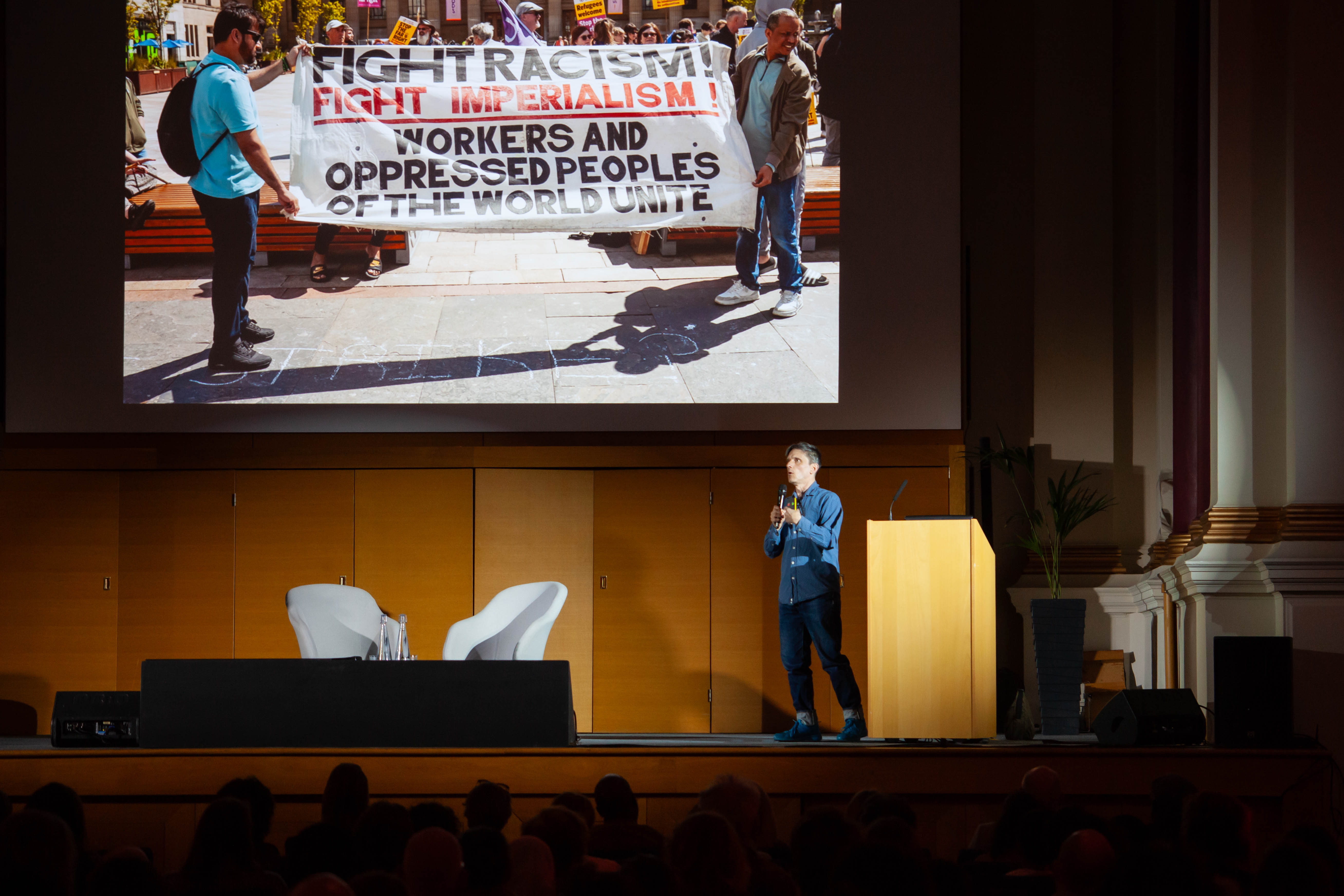
Putin’s Happy (2019), filmed amid the Brexit protests at Parliament Square, is in many ways, and perhaps was always anticipated to be, relentlessly bleak. Yet its hope arrives through a group of young protesters, one of whom, a British-Pakistani teenager, reminds the camera that she belongs here as much as anyone: ‘We might be brown, but we are British too.’
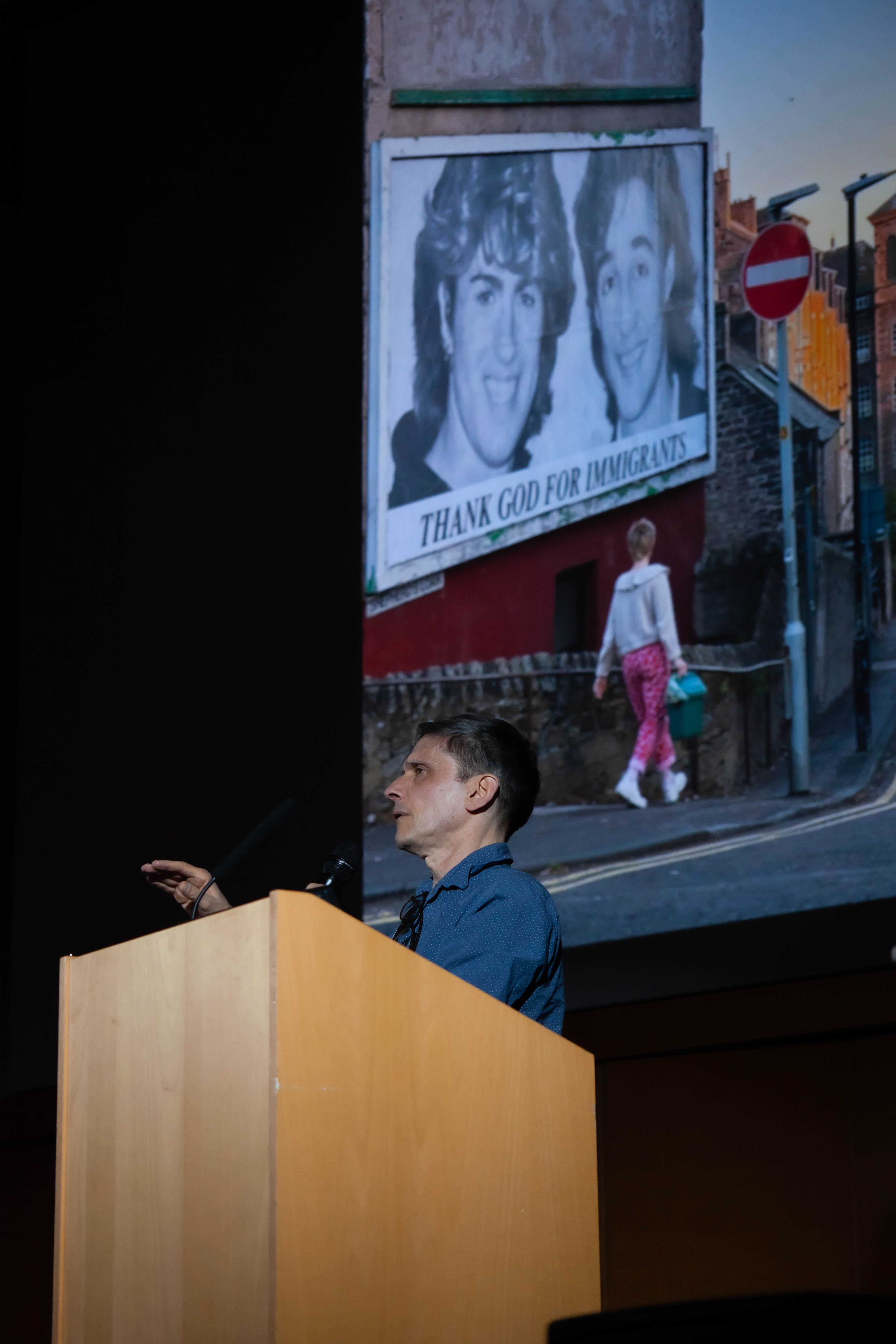
From those same encounters came posters that went up across the city reading Thank God for Immigrants. Deller found the far-right protesters he filmed less enraging than sad, and during lockdown he wondered what might happen if one of them woke in hospital to find their life saved by a nurse from the Philippines, India or Bangladesh. He styled a poster after Wham!, all pure pop euphoria, and a band whose frontman was himself the son of a Greek Cypriot immigrant. Together, these works reflect a country diverse and generous and yet complicit in violence and hate it would rather not look at. Deller never flinches from that tension; he uses it, turning discomfort into argument, conversation and maybe even a source of pride.
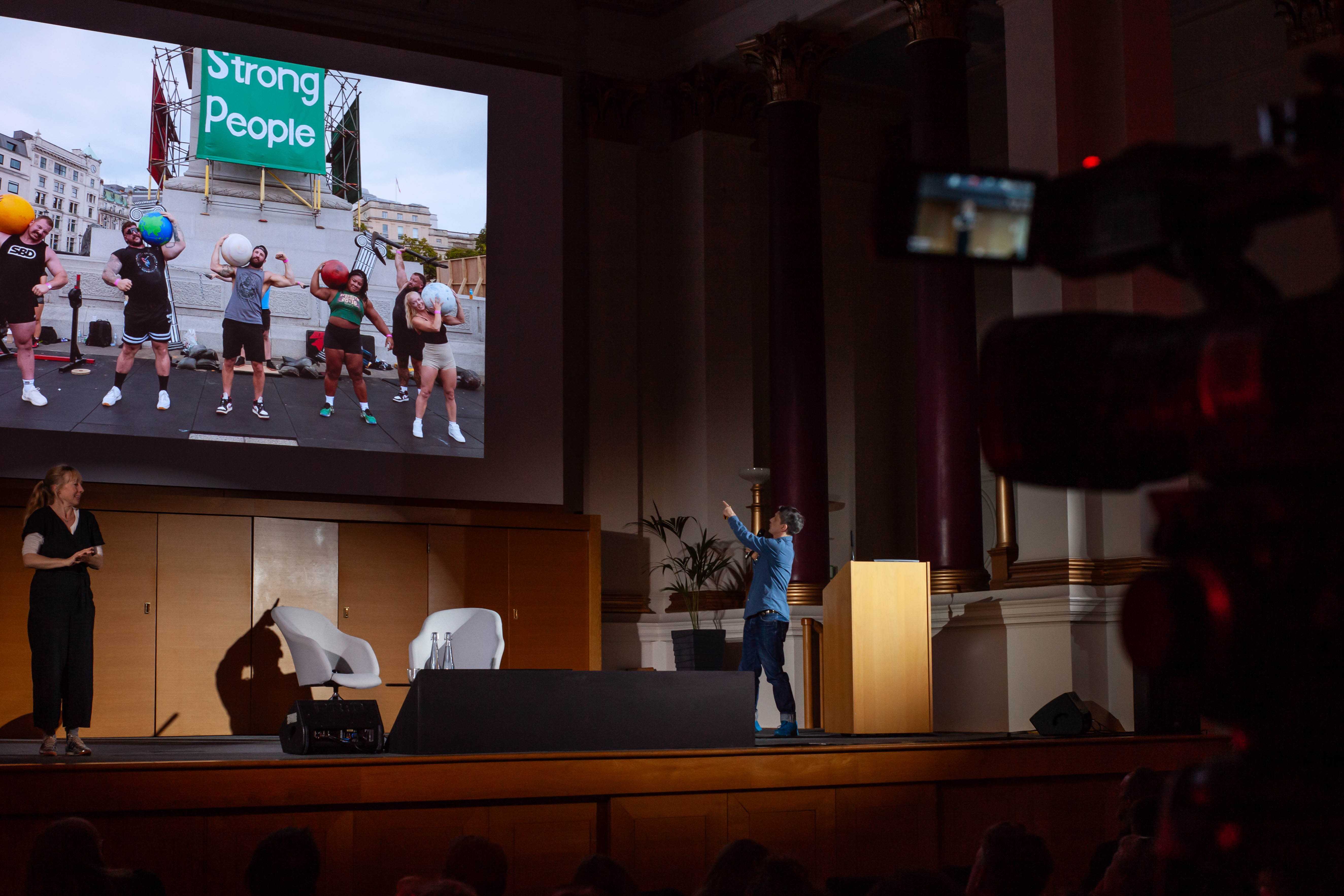
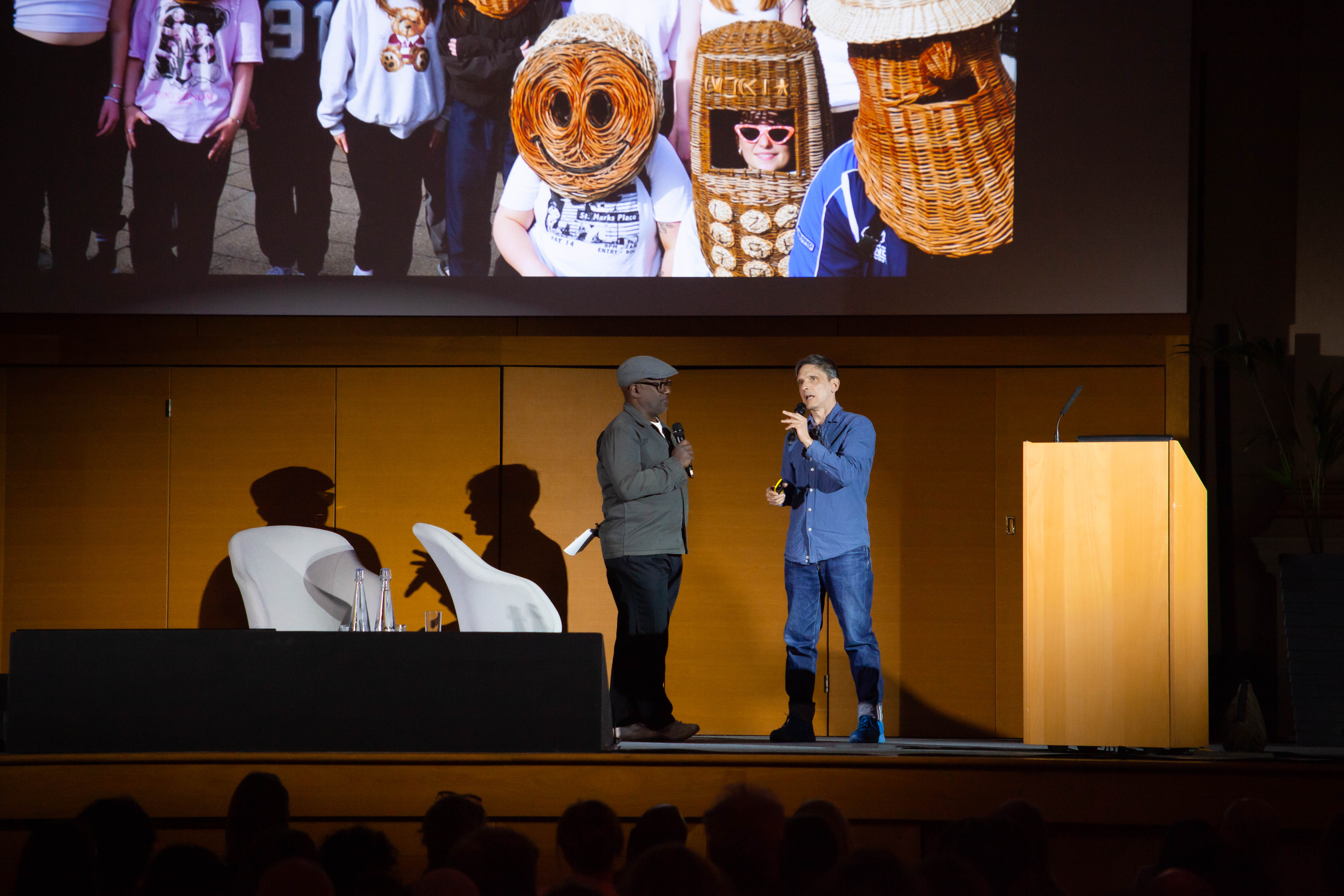
His most expansive experiment in public space came last year with The Triumph of Art (2025), made for the National Gallery’s bicentenary celebrations. Deller took over the gallery’s ‘front garden’, Trafalgar Square, and toured the birthday party to Derry, Dundee, Plymouth and Wales, with processions of folk and dance music led by invented characters and giant conical heads. In Dundee the volatility of the open air became vivid: a far-right, anti-immigration demonstration had been booked into the same square. When the performers emerged (dancers dressed as standing stones, a three-dimensional Medusa lifted from a painting in the collection) and the folk music began, ‘the whole atmosphere changed almost immediately.’ Folk music, Deller suggested, carries associations of weddings and christenings; without a word of confrontation, the gaiety disarmed the square.
For the London finale he closed Whitehall, the street of Downing Street, the Cenotaph and the Banqueting House, and sent a cheeky, eclectic and near-medieval procession down it towards Trafalgar Square. A twenty-foot inflatable Eve drifted past the Cenotaph; the head of Charles I, modelled from his portraits, was carried out at the spot where the king was executed. Passers-by were handed the materials to join in: printing, drawing, trying on the great wicker heads, which for Deller were always ‘about freedom, about taking on a personality’. No fencing, no security checks, just faith in the crowd’s ability to embrace the chaos and dance along to the steel band. ‘If you’re lucky as an artist,’ he said, ‘you get to change reality, if only for a minute.’
That faith in humanity is where his work lands most pointedly for anyone thinking about how public space is shaped and shared: a reminder that people shape the built environment as much as, if not more than, it shapes them.
Like a mirror, Deller reflects the fixtures of British identity back at us as something to engage with, argue with, climb on. But a mirror is useless without someone standing in front of it: his real material was never the stone circle or the uniform or the empty square, it was the crowd that turned up, and what they were willing to do once nobody told them how to behave. That is why the performance refuses to stay a performance. It is felt as real and produces real feeling. Not history stored securely behind glass, but history still bubbling with energy, that we are living inside.
By Elise Nwokedi